



Search is changing rapidly. Instead of relying only on traditional search engines, millions of people now use AI-powered platforms like ChatGPT, Gemini, Claude, Perplexity, and Google AI Overviews to find answers, compare products, and make purchasing decisions. This shift has created a new challenge for businesses: understanding what are ai search optimization tools and how they can improve visibility across these AI-driven search experiences.
Table Of Content
- Quick Answer
- Key Takeaways
- What Are AI Search Optimization Tools?
- Why AI Search Optimization Matters in 2026
- How AI Search Optimization Tools Work
- Types of AI Search Optimization Tools
- AI Search Optimization Tool Comparison
- How to Choose the Right AI Search Optimization Tool
- Step-by-Step Guide to Using AI Search Optimization Tools
- Real-World Examples
- Benefits of AI Search Optimization Tools
- Risks & Limitations
- Common Mistakes to Avoid
- Expert Insights
- Frequently Asked Questions
- 1. Are AI search optimization tools different from traditional SEO tools?
- 2. Who should use AI search optimization tools?
- 3. Do AI search optimization tools replace SEO?
- 4. How often should I monitor AI visibility?
- 5. Can small businesses benefit from AI search optimization?
- 6. What is the biggest factor influencing AI search visibility?
- Final Verdict
Unlike traditional SEO tools that mainly focus on rankings and keywords, AI search optimization tools help brands monitor how AI models mention their content, identify citation opportunities, optimize for conversational search, and strengthen topical authority. They provide insights that help businesses become trusted sources for both search engines and large language models (LLMs).
Whether you’re a content creator, marketer, SEO professional, or business owner, learning how these tools work can help you stay competitive as AI becomes a primary way people discover information online. In this guide, you’ll learn what AI search optimization tools are, how they work, their different types, and how to choose the right solution for your goals.
Quick Answer
AI search optimization tools are software platforms that help websites improve their visibility in AI-powered search experiences such as ChatGPT, Google AI Overviews, Gemini, Claude, and Perplexity. They analyze AI-generated responses, monitor brand mentions, identify optimization opportunities, track citations, and provide recommendations that increase the chances of your content being referenced by AI systems.
Key Takeaways
- AI search optimization focuses on improving visibility beyond traditional search rankings.
- These tools help monitor AI citations, brand mentions, and answer visibility.
- They support both SEO and Generative Engine Optimization (GEO) strategies.
- High-quality, authoritative content performs better across AI-powered search platforms.
- Businesses that optimize early can gain a long-term competitive advantage.
What Are AI Search Optimization Tools?
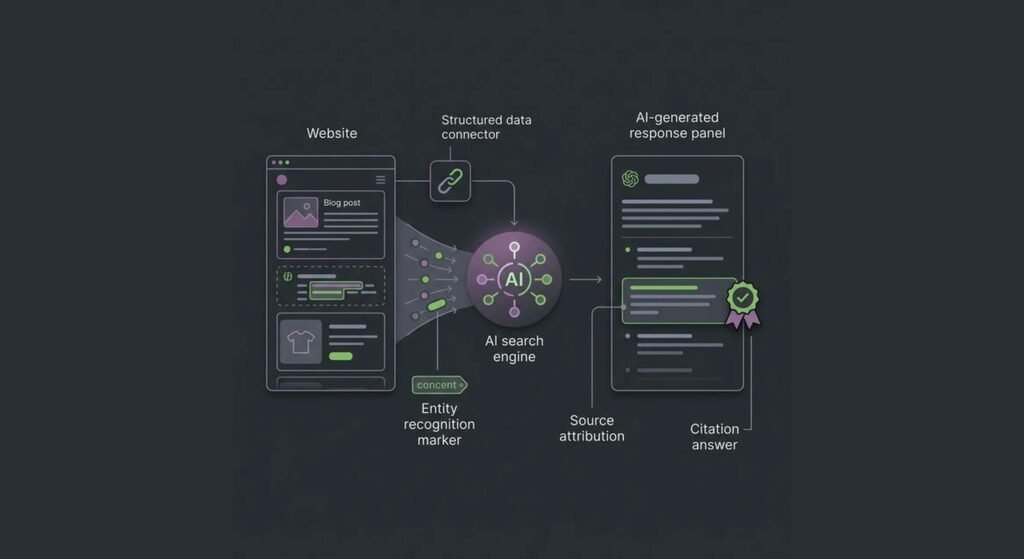
AI search optimization tools are specialized platforms designed to help websites, brands, and publishers improve their presence across AI-powered search engines and conversational assistants. Rather than tracking only keyword rankings, these tools measure how artificial intelligence understands, references, and recommends your content.
Traditional SEO tools were built around search engine algorithms that ranked web pages. AI search introduces a different experience. Users now ask complete questions such as “What’s the best CRM for startups?” or “Which AI writing tool offers the best value?” Instead of showing ten blue links, AI platforms generate direct answers using information collected from multiple trusted sources.
Because of this shift, businesses need visibility where AI systems generate answers—not just where search engines display webpages.
Modern AI search optimization platforms help marketers answer questions like:
- Is my brand appearing in AI-generated answers?
- Which competitors receive more AI citations?
- What topics should I cover to improve authority?
- Which pages are frequently referenced by AI assistants?
- How can I structure content for better AI understanding?
Most tools combine several capabilities, including AI citation tracking, entity analysis, semantic optimization, content recommendations, competitive intelligence, and performance monitoring.
Another important difference is their focus on user intent. AI models prioritize content that directly answers questions, demonstrates expertise, and provides trustworthy information. AI search optimization tools evaluate whether your pages satisfy these requirements and identify improvements that increase the likelihood of being cited.
For example, if your website publishes software reviews, an AI optimization tool may recommend adding clearer comparisons, updated statistics, author expertise, FAQs, and structured formatting because these elements help AI systems better understand your content.
Instead of replacing SEO, AI search optimization complements it. Businesses that combine strong technical SEO with AI-focused optimization are more likely to maintain visibility as search continues evolving.
Why AI Search Optimization Matters in 2026
The rapid adoption of generative AI has transformed how people search for information. Rather than clicking through multiple websites, users increasingly expect immediate, conversational answers. This behavior changes how brands earn visibility, making AI search optimization an essential part of digital marketing in 2026.
One major reason is the rise of AI-generated search experiences. Google AI Overviews summarize information directly in search results, while ChatGPT, Gemini, Claude, and Perplexity answer complex questions using trusted online sources. If your content isn’t optimized for these systems, it may receive fewer mentions even if it ranks well in traditional search.
AI search optimization also helps businesses build stronger topical authority. AI models favor websites that consistently publish comprehensive, well-organized, and reliable content within a specific subject area. Instead of creating isolated articles targeting individual keywords, successful publishers develop connected content ecosystems that demonstrate expertise across an entire topic.
Another advantage is improved decision-making. These tools reveal how AI platforms interpret your brand, identify missing topics, and uncover opportunities to strengthen content before competitors do. Instead of guessing which pages deserve updates, marketers receive data-driven recommendations based on AI visibility.

Businesses also benefit from deeper competitive insights. Rather than only comparing keyword rankings, they can analyze which competitors appear most frequently in AI responses and understand why those brands are being selected as trusted sources.
As AI search evolves, monitoring visibility becomes just as important as monitoring organic traffic. This is one reason many marketers are also exploring why use ai search monitoring tools to understand how their brand is represented across different AI platforms and identify opportunities to improve future content.
Organizations that invest early gain an advantage because AI systems continuously learn from authoritative, well-maintained content. The stronger your digital authority today, the more likely your content will be surfaced in future AI-generated answers.
How AI Search Optimization Tools Work
Although every platform has unique capabilities, most AI search optimization tools follow a similar workflow that combines AI analysis, search monitoring, competitive research, and content optimization.
The process usually begins with monitoring AI-generated responses across multiple platforms. The software asks hundreds or even thousands of prompts related to your industry, products, or services. It then records which brands, websites, and sources appear most frequently.
After collecting this information, the tool analyzes your visibility compared to competitors. Instead of showing only keyword rankings, it measures metrics such as citation frequency, answer inclusion, entity recognition, topical authority, and share of AI voice.
Next comes content evaluation. The platform scans your existing pages to identify strengths and weaknesses. It may recommend expanding thin content, adding expert commentary, improving internal linking, strengthening topical clusters, updating outdated information, or restructuring sections to answer user questions more directly.
Many tools also analyze semantic relationships between topics. AI models don’t simply match keywords—they understand context. As a result, optimization software often recommends related concepts, entities, questions, and supporting subtopics that improve overall topical completeness.
Some advanced platforms continuously monitor changes in AI-generated responses. If your brand disappears from important answers or a competitor begins receiving more citations, you’ll receive alerts so you can investigate and respond quickly.
Another valuable capability is performance reporting. Instead of focusing only on impressions or rankings, AI optimization tools provide insights into conversational visibility, citation growth, entity strength, and answer quality. These metrics help businesses measure progress in an environment where traditional SEO KPIs alone are no longer sufficient.
Ultimately, AI search optimization tools act as intelligence platforms. They help marketers understand not just where they rank, but how AI systems interpret, trust, and recommend their content—allowing them to make smarter optimization decisions as search continues to evolve.
Types of AI Search Optimization Tools
AI search optimization is not handled by a single type of platform. Different tools solve different challenges, and the best strategy often combines several capabilities. Some solutions focus on monitoring AI-generated responses, while others help improve content quality, technical SEO, or brand authority.
The most common categories include AI visibility tracking tools, content optimization platforms, entity and knowledge graph analyzers, technical SEO solutions, and competitive intelligence tools. Together, they help marketers understand how AI models interpret their content and where improvements are needed.
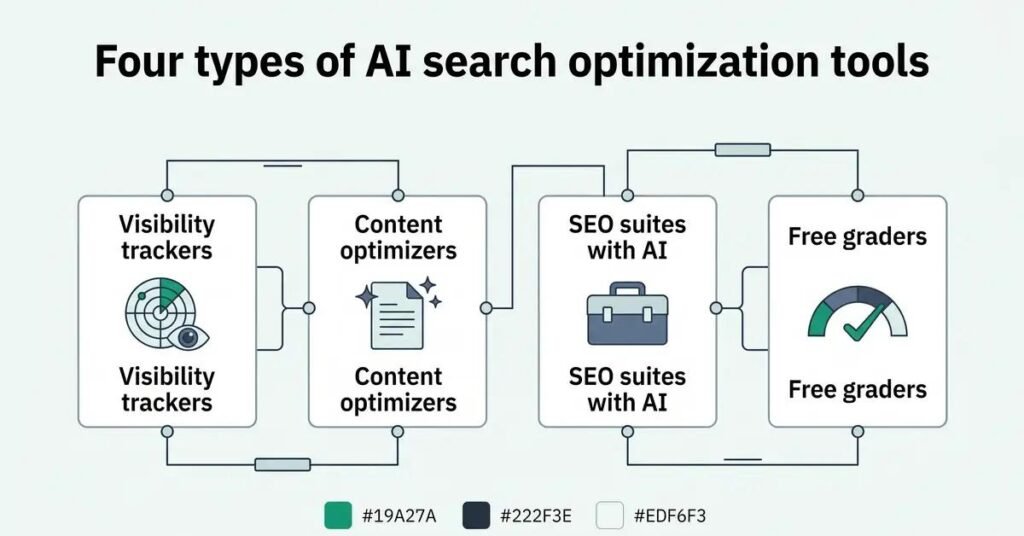
For businesses just getting started, it’s worth researching what are the best ai search monitoring tools before investing in a platform. Comparing features such as AI citation tracking, competitor monitoring, prompt analysis, and reporting can help you choose software that aligns with your SEO and GEO goals.
AI Search Optimization Tool Comparison
| Tool Type | Primary Purpose | Best For |
|---|---|---|
| AI Visibility Monitoring | Tracks mentions and citations in AI responses | Brand monitoring |
| Content Optimization | Improves readability, topical coverage, and semantic relevance | Content teams |
| Technical SEO | Enhances crawlability, indexing, and structured data | SEO specialists |
| Entity & Knowledge Graph Tools | Strengthens entity recognition and authority | Publishers & enterprises |
| Competitive Intelligence | Compares AI visibility with competitors | Marketing teams |
How to Choose the Right AI Search Optimization Tool
Selecting the right platform depends on your objectives rather than the number of features it offers. If your priority is increasing brand visibility in AI-generated answers, choose a tool that tracks citations across multiple AI platforms instead of focusing only on traditional keyword rankings.
Look for features such as competitor analysis, content recommendations, prompt monitoring, entity tracking, reporting dashboards, and integrations with your existing SEO workflow. Reliable data, an intuitive interface, and actionable insights are usually more valuable than hundreds of advanced metrics that rarely influence business decisions.
If you manage a growing content website, prioritize platforms that continuously monitor AI visibility rather than generating one-time reports. This helps you identify opportunities as AI search evolves.
Step-by-Step Guide to Using AI Search Optimization Tools
- Define your goals. Decide whether you want more AI citations, stronger topical authority, or better brand visibility.
- Audit your existing content. Identify pages that already perform well and those needing updates.
- Monitor AI responses. Track how ChatGPT, Gemini, Claude, and Perplexity reference your brand and competitors.
- Improve content quality. Add expert insights, original examples, statistics, FAQs, and clear formatting.
- Strengthen topical authority. Build content clusters around related topics instead of publishing isolated articles.
- Measure and refine. Review AI visibility reports regularly and update content as search behavior changes.
Consistent monitoring and optimization deliver better long-term results than one-time improvements, making AI search optimization an ongoing strategy rather than a one-off project.
Real-World Examples
Many businesses are already adapting their content strategies to improve visibility in AI-powered search. For example, a SaaS company publishing detailed product comparison guides, expert tutorials, and regularly updated documentation is more likely to be referenced by ChatGPT or Google AI Overviews than a competitor with thin, sales-focused pages. Likewise, an e-commerce brand that enriches its product pages with FAQs, buying guides, and structured data improves its chances of appearing in AI-generated recommendations.
Some organizations also use platforms like MakeAINow to streamline AI-assisted content creation while maintaining editorial oversight, allowing teams to produce comprehensive, user-focused resources that align with modern search expectations.
Benefits of AI Search Optimization Tools
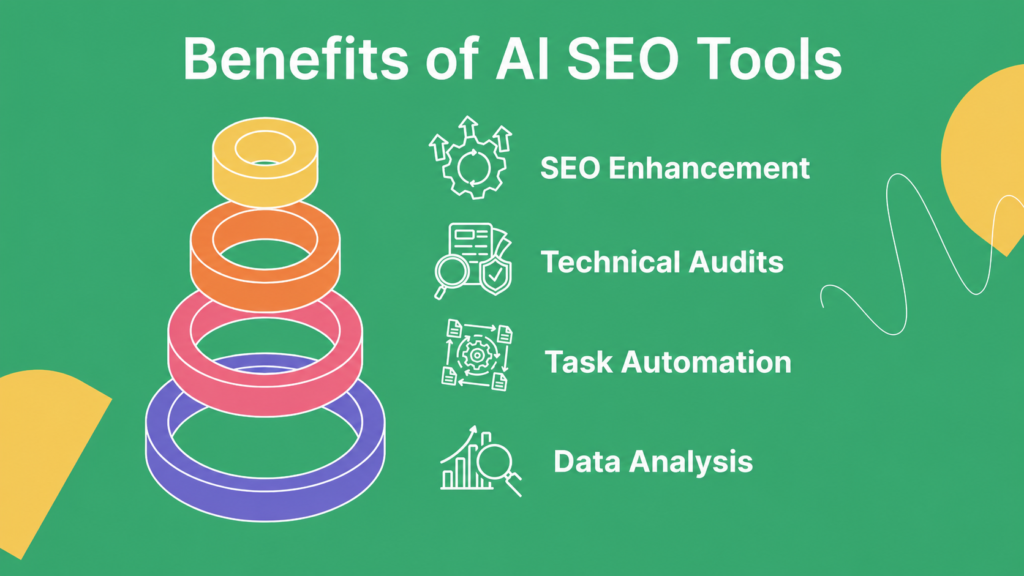
AI search optimization tools provide far more than visibility reports. They help marketers understand how AI platforms interpret their content and where improvements can increase discoverability.
Some of the biggest benefits include:
- Better visibility across AI-powered search platforms.
- Improved topical authority and content quality.
- Competitive insights based on AI-generated responses.
- Data-driven content optimization recommendations.
- Early identification of emerging search trends.
- More efficient SEO and content planning.
As AI becomes a primary discovery channel, these insights help businesses stay ahead instead of reacting after competitors gain visibility.
Risks & Limitations
Although AI search optimization tools are valuable, they are not a guaranteed shortcut to better visibility. AI search algorithms evolve quickly, meaning recommendations that work today may require adjustments in the future.
Businesses should also avoid relying solely on automation. Human expertise, original research, firsthand experience, and editorial review remain essential for building trust. In addition, AI visibility metrics are still developing, so they should complement—not replace—traditional SEO performance indicators such as organic traffic, conversions, and engagement.
Common Mistakes to Avoid
Many businesses struggle with AI optimization because they focus on tactics rather than user value. Common mistakes include:
- Publishing keyword-heavy content with little practical information.
- Ignoring topical authority and content depth.
- Failing to update outdated articles.
- Overlooking structured data and technical SEO.
- Creating content only for search engines instead of answering real user questions.
- Tracking rankings but ignoring AI-generated mentions and citations.
Avoiding these mistakes creates a stronger foundation for long-term AI search visibility.
Expert Insights
AI search optimization is becoming an extension of modern SEO rather than a replacement for it. The websites most likely to succeed are those that consistently publish trustworthy, experience-driven content supported by strong technical foundations.
Businesses should focus on becoming recognized authorities within their niche by answering user questions comprehensively, citing reliable sources, and maintaining content freshness. If your goal is sustainable growth, learning how to improve brand visibility in ai search engines should become part of your long-term content strategy instead of a one-time optimization task.
Frequently Asked Questions
1. Are AI search optimization tools different from traditional SEO tools?
Yes. Traditional SEO tools mainly track keyword rankings and backlinks, while AI search optimization tools focus on AI citations, conversational visibility, entity recognition, and brand mentions across AI-powered platforms.
2. Who should use AI search optimization tools?
They are useful for businesses, publishers, content marketers, SEO professionals, agencies, and anyone who wants greater visibility in AI-generated search results.
3. Do AI search optimization tools replace SEO?
No. They complement traditional SEO by helping optimize content for AI-driven search experiences while technical SEO and organic search remain essential.
4. How often should I monitor AI visibility?
Monthly monitoring is a good starting point, while competitive industries may benefit from weekly tracking to identify changes quickly.
5. Can small businesses benefit from AI search optimization?
Absolutely. High-quality, authoritative content can compete effectively regardless of company size, making AI optimization valuable for startups and established brands alike.
6. What is the biggest factor influencing AI search visibility?
Comprehensive, trustworthy, and well-structured content that clearly answers user intent while demonstrating expertise is one of the strongest signals for AI-powered search systems.
Final Verdict
AI search is transforming how people discover information online, making visibility in AI-generated answers just as important as traditional search rankings. AI search optimization tools help businesses understand how their content is interpreted by AI systems, identify opportunities for improvement, and strengthen their overall digital authority.
Rather than chasing algorithms, the most successful strategy is to create valuable, accurate, and experience-driven content that genuinely helps users. Combined with ongoing monitoring and optimization, AI search optimization tools can become a powerful asset for improving discoverability across Google AI Overviews, ChatGPT, Gemini, Claude, Perplexity, and the next generation of AI-powered search experiences.