

What Are the Best AI Search Monitoring Tools? Top Solutions to Track Your Brand in AI Search (2026)

As AI-powered search engines continue to reshape how people discover information online, businesses need new ways to monitor their digital presence. If you’re wondering what are the best ai search monitoring tools, you’re not alone. Traditional SEO platforms are no longer enough because users increasingly rely on AI assistants like ChatGPT, Gemini, Claude, and Perplexity instead of conventional search engines. These AI platforms generate direct answers, summarize web content, and recommend brands without always sending users to websites.
Table Of Content
- Quick Answer
- Key Takeaways
- What Are AI Search Monitoring Tools?
- Why AI Search Monitoring Matters for Modern SEO
- Top AI Search Monitoring Tools in 2026
- 1. Profound
- 2. Peec AI
- 3. Semrush AI Toolkit
- 4. Ahrefs
- 5. Nightwatch
- 6. Goodie AI
- Comparison Table: Best AI Search Monitoring Tools
- How to Choose the Right AI Search Monitoring Tool
- Step-by-Step Guide to Monitor Your Brand in AI Search
- Real-World Example
- Benefits and Limitations
- Common Mistakes to Avoid
- Expert Insights
- Frequently Asked Questions
- 1. What are AI search monitoring tools?
- 2. Are AI search monitoring tools different from SEO tools?
- 3. Which businesses benefit the most?
- 4. Can AI monitoring improve search rankings?
- 5. How often should AI visibility be monitored?
- 6. Is AI search monitoring worth investing in?
- Final Verdict
This shift means brands must understand not only where they rank on Google but also how often they appear in AI-generated responses. AI search monitoring tools help businesses track brand mentions, analyze AI visibility, monitor competitors, and identify opportunities to improve their presence across multiple AI search platforms.
Whether you’re a marketer, SEO professional, content creator, SaaS founder, or eCommerce business owner, investing in the right monitoring solution can help you stay ahead of changing search behaviors. This guide explores the best AI search monitoring tools available today, compares their features, explains how they work, and helps you choose the right platform based on your goals and budget.
Quick Answer
The best AI search monitoring tools help businesses track how often their brand appears in AI-generated answers across platforms like ChatGPT, Gemini, Claude, and Perplexity. Leading options include Profound, Peec AI, Goodie AI, Nightwatch, Semrush AI Toolkit, and Ahrefs. The right tool depends on whether your priority is brand visibility, competitor tracking, content optimization, or enterprise-level reporting.
Key Takeaways
- AI search monitoring is becoming an essential part of modern SEO.
- These tools track brand mentions across AI-powered search engines.
- Monitoring AI visibility helps improve content strategy and authority.
- Different tools specialize in analytics, competitor tracking, reporting, or optimization.
- Businesses should combine AI monitoring with traditional SEO for the best results.
- Choosing the right platform depends on budget, team size, and business objectives.
What Are AI Search Monitoring Tools?
AI search monitoring tools are software platforms designed to measure how your brand, products, and website appear inside AI-generated search results. Unlike traditional SEO tools that mainly track keyword rankings on Google or Bing, these platforms monitor AI assistants and answer engines that generate conversational responses.
When someone asks an AI assistant for the best accounting software, marketing agency, travel destination, or CRM platform, the assistant may recommend several brands instead of showing ten blue links. AI search monitoring tools analyze those responses to determine whether your business appears, how frequently it appears, and which competitors receive more visibility.
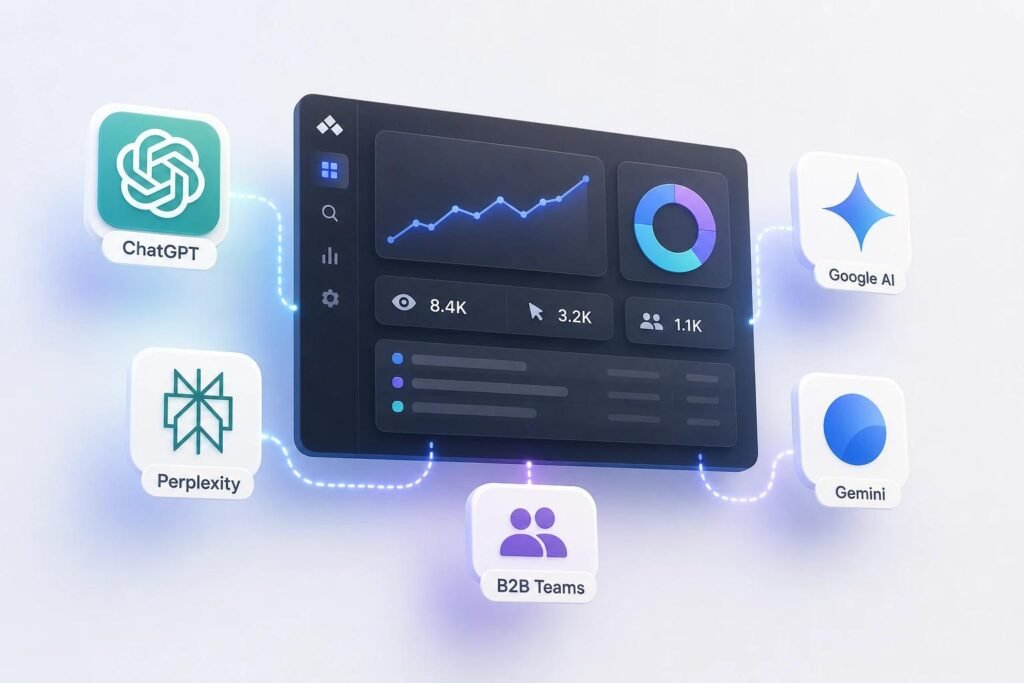
Modern AI monitoring solutions collect large amounts of AI-generated data from different platforms and organize it into dashboards. These dashboards often include brand mentions, citation sources, sentiment analysis, prompt tracking, visibility scores, and competitor comparisons.
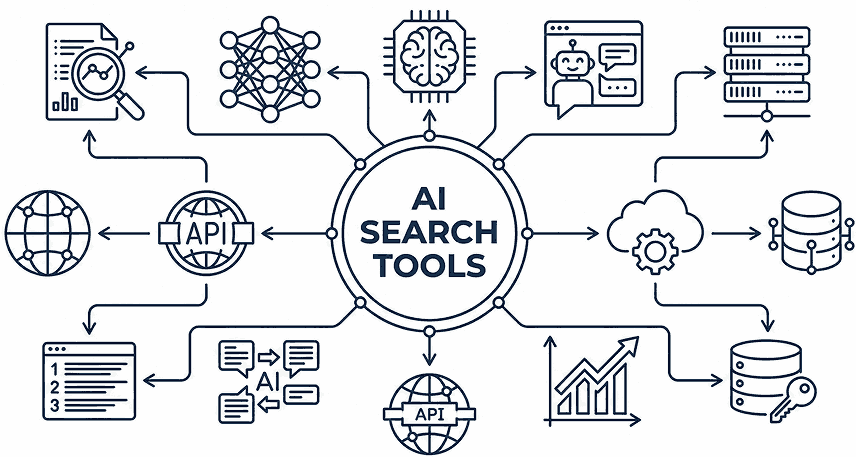
For example, a cybersecurity company may discover that ChatGPT frequently recommends three competitors while rarely mentioning its own products. Instead of guessing why this happens, the marketing team can analyze AI responses, identify missing content, improve topical authority, and monitor future improvements.
Another valuable capability is prompt monitoring. Rather than tracking only keywords, these tools evaluate thousands of natural language prompts that real users ask AI assistants. This provides much deeper insights into customer intent than traditional keyword research alone.
Businesses also gain historical reporting that shows whether AI visibility improves over time after publishing new content, updating existing pages, or earning additional authoritative backlinks.
Many organizations are now realizing why use ai search monitoring tools is no longer just an experimental question but an essential part of future-proofing their digital marketing strategy. As AI-generated search continues growing, understanding your brand’s visibility across these platforms becomes increasingly important for maintaining online authority.
Why AI Search Monitoring Matters for Modern SEO
Artificial intelligence is changing search behavior faster than most businesses expected. Instead of clicking through multiple search results, users increasingly ask AI assistants direct questions and receive complete answers within seconds. This evolution affects website traffic, brand discovery, and customer acquisition.
Traditional SEO still plays a vital role, but ranking on Google’s first page doesn’t automatically guarantee visibility inside AI-generated responses. AI systems evaluate content differently by considering expertise, authority, freshness, structured information, and contextual relevance.
This shift has created an entirely new performance metric: AI visibility. Companies now need to measure not only search rankings but also how frequently AI assistants recommend their products or reference their expertise.
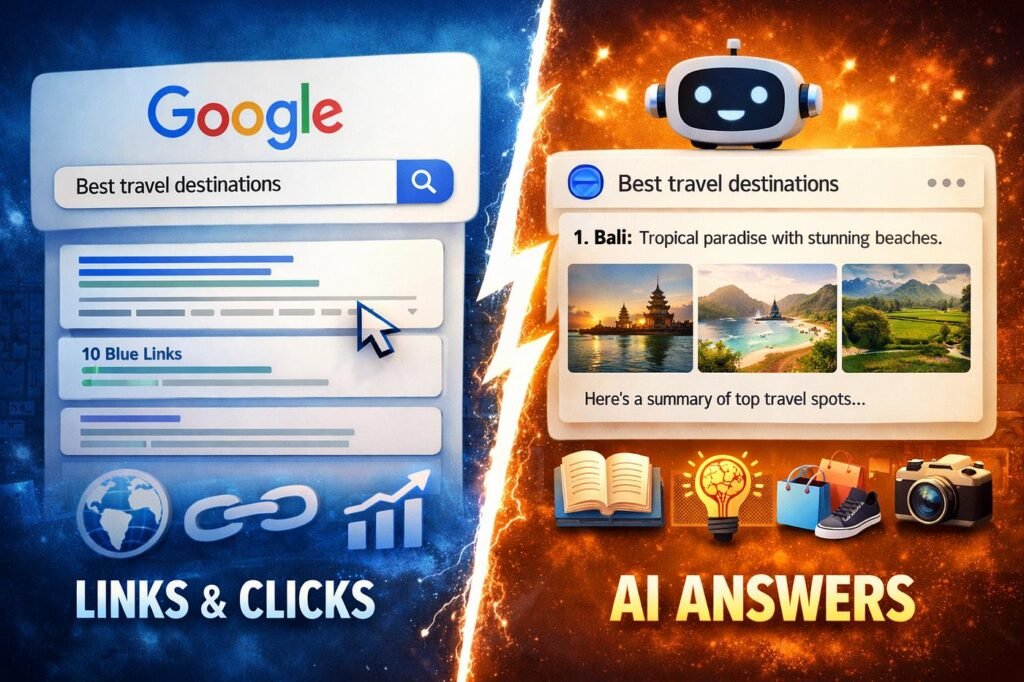
Consider a software company that ranks third on Google for a valuable keyword. Despite strong organic rankings, ChatGPT may consistently recommend two competitors instead. Without AI monitoring, the business would never know it is losing potential customers during AI-assisted searches.
Monitoring AI search also helps marketing teams identify content gaps. If competitors are consistently cited for specific topics while your brand is absent, that often signals missing expertise or insufficient topical coverage.
Another major advantage is faster competitive intelligence. AI search monitoring platforms reveal which brands dominate AI-generated answers, allowing businesses to study successful competitors and refine their own content strategies accordingly.
Organizations that embrace AI visibility today gain a competitive advantage because relatively few companies actively monitor these emerging search environments. As adoption grows, competition for AI recommendations will become increasingly intense.
Businesses exploring what are ai search optimization tools often discover that monitoring and optimization work together. Monitoring identifies visibility opportunities, while optimization improves the likelihood that AI systems reference your content in future responses.
Top AI Search Monitoring Tools in 2026
1. Profound
Profound has become one of the most recognized enterprise-focused AI search monitoring platforms. It specializes in tracking how brands appear across major AI search engines and provides detailed reporting designed for marketing teams, agencies, and large organizations.
One of Profound’s biggest strengths is its extensive prompt monitoring capability. Instead of tracking only a handful of keywords, the platform evaluates thousands of AI prompts to determine when and how brands appear in generated answers. This gives businesses a much broader understanding of customer discovery journeys.
The platform also offers competitor benchmarking, allowing organizations to compare AI visibility against competing brands across different industries. Marketing teams can quickly identify which competitors dominate AI-generated recommendations and investigate the factors contributing to their success.
Profound’s reporting dashboards are highly visual and suitable for executive presentations. Users can monitor AI visibility trends, citation frequency, brand sentiment, and overall performance over time.
Although the platform is primarily designed for enterprise organizations, larger agencies managing multiple client accounts also benefit from its advanced analytics and scalable reporting capabilities.
For businesses heavily investing in AI-first marketing strategies, Profound remains one of the strongest choices available today.
2. Peec AI
Peec AI focuses on helping businesses understand how AI assistants perceive their brand and content across multiple conversational search platforms. Rather than emphasizing traditional SEO metrics, the platform concentrates specifically on AI-generated responses.
One of its standout features is visibility scoring, which measures how frequently a brand appears for relevant prompts compared to competitors. This makes it easier to identify whether optimization efforts actually improve AI recognition over time.
Peec AI also excels at prompt categorization. Users can organize prompts by industry, buying intent, informational searches, product comparisons, or customer questions. This segmentation helps content teams prioritize high-value opportunities that influence purchasing decisions.
Its clean interface makes complex AI visibility data accessible even for teams with limited technical expertise. Marketing professionals can quickly identify missing content, track AI citations, and monitor competitor performance without navigating overwhelming reports.
Another benefit is ongoing monitoring rather than one-time snapshots. Businesses receive continuous insights into changing AI search behavior, making it easier to adapt content strategies as AI platforms evolve.
3. Semrush AI Toolkit
Semrush has long been a trusted name in SEO, and its AI Toolkit extends that expertise into AI-powered search monitoring. While it doesn’t focus exclusively on AI visibility, it provides valuable insights into how AI-driven search experiences impact your brand alongside traditional SEO metrics.
A major advantage is having AI monitoring integrated with keyword research, backlink analysis, content audits, and competitor intelligence in one platform. Instead of switching between multiple tools, marketing teams can evaluate how organic search performance and AI visibility complement each other.
The toolkit helps identify which pages have the strongest potential to be cited by AI assistants. It also highlights topical gaps, content freshness issues, and authority signals that influence whether AI models reference your website. For businesses already using Semrush, adding AI-focused reporting is a natural progression that reduces the learning curve.
4. Ahrefs
Ahrefs remains one of the most powerful SEO platforms available, and while its primary strength is not AI search monitoring, it provides many of the signals that influence AI-generated recommendations.
Its extensive backlink database, keyword explorer, content analysis, and competitor research tools help businesses build the authority AI systems often rely on when generating responses. High-quality backlinks, comprehensive topical coverage, and well-structured content all contribute to stronger visibility in AI-powered search experiences.
Ahrefs is particularly useful for identifying content opportunities that competitors have already captured. By expanding those topics with original research and expert insights, businesses increase their chances of being referenced by AI assistants over time.
5. Nightwatch
Nightwatch combines traditional rank tracking with modern search analytics, making it a practical option for businesses transitioning into AI-first SEO strategies.
Its customizable dashboards, location-based tracking, and performance reports help marketing teams understand how visibility changes across different search environments. Although AI-specific reporting is still evolving, Nightwatch provides valuable insights into organic performance that often correlate with AI discoverability.
The platform is well suited for agencies, freelancers, and small-to-medium businesses looking for an affordable monitoring solution without the complexity of enterprise software.
6. Goodie AI
Goodie AI is designed specifically for businesses that want to understand how conversational AI platforms discuss their products, services, and brand.
Unlike traditional SEO tools, Goodie AI focuses on AI-generated answers instead of search rankings. Users can monitor brand mentions, compare competitor visibility, identify recurring prompts, and discover content opportunities based on real AI interactions.
Its intuitive dashboard makes it easy for content teams to prioritize updates that improve AI visibility without requiring extensive technical expertise. For organizations beginning their AI optimization journey, Goodie AI offers a focused and user-friendly approach.
Comparison Table: Best AI Search Monitoring Tools
| Tool | Best For | Key Strength | Ideal Users |
|---|---|---|---|
| Profound | Enterprise AI monitoring | Large-scale AI visibility tracking | Enterprises |
| Peec AI | AI brand monitoring | Prompt analysis & visibility scoring | Marketing teams |
| Semrush AI Toolkit | All-in-one SEO | AI + SEO integration | Businesses & agencies |
| Ahrefs | Content authority | Backlinks & competitor research | SEO professionals |
| Nightwatch | Rank tracking | Performance monitoring | SMBs & agencies |
| Goodie AI | AI visibility | Conversational AI monitoring | Growing businesses |
How to Choose the Right AI Search Monitoring Tool
Choosing the right platform depends on your business goals rather than simply selecting the tool with the most features.
Start by identifying where your audience searches for information. If AI assistants are becoming a significant traffic source, prioritize tools that monitor ChatGPT, Gemini, Claude, and Perplexity instead of relying solely on Google rankings.
Next, consider your reporting needs. Agencies may require multi-client dashboards, while in-house marketing teams often benefit from competitor benchmarking and visibility scoring.
Budget is another important factor. Enterprise platforms typically provide deeper analytics but come with higher subscription costs. Smaller businesses may achieve excellent results using affordable tools combined with traditional SEO software.
Finally, look for platforms that evolve quickly. AI search changes rapidly, so regular feature updates and expanding platform support are essential when making a long-term investment.
Step-by-Step Guide to Monitor Your Brand in AI Search
Following a structured process helps businesses gain meaningful insights instead of collecting disconnected data.
Step 1: Identify your most valuable products, services, and branded search topics.
Step 2: Build a list of conversational prompts that potential customers are likely to ask AI assistants.
Step 3: Monitor how frequently your brand appears compared to competitors.
Step 4: Review the websites and sources AI assistants cite in their responses.
Step 5: Improve weak content by adding expert opinions, statistics, case studies, FAQs, and original research.
Step 6: Continue tracking visibility over several months to measure improvements after publishing updated content.
Companies that also explore what strategies improve brand visibility in ai search engines often discover that continuous monitoring, high-quality content, and topical authority work together to produce long-term results rather than quick wins.
Real-World Example
Imagine a B2B SaaS company offering project management software. The marketing team notices that despite ranking well on Google, their brand rarely appears in ChatGPT recommendations for project management tools.
After implementing an AI search monitoring platform, they discover competitors consistently receive citations because their websites contain detailed comparison pages, implementation guides, industry research, and comprehensive FAQs.
The company responds by publishing more authoritative resources, improving internal linking, adding structured data, and updating outdated content. Over the following months, AI visibility reports show steady growth in brand mentions across multiple AI assistants.

This example demonstrates that AI visibility is closely tied to content quality, expertise, and topical completeness rather than rankings alone.
Benefits and Limitations
AI search monitoring offers several important benefits. Businesses gain greater visibility into customer discovery journeys, understand competitor performance, improve content strategy, and measure how AI assistants represent their brand. These insights support smarter marketing decisions and help organizations adapt as AI search continues to evolve.
However, there are limitations. AI models change frequently, meaning visibility can fluctuate even without major website updates. Different AI platforms may also generate different responses for similar prompts, making consistency difficult to measure. Additionally, some enterprise-grade monitoring solutions can be expensive for smaller organizations.
Success requires ongoing optimization rather than expecting immediate improvements after implementing a tool.
Common Mistakes to Avoid
One of the biggest mistakes businesses make is treating AI search monitoring as a replacement for SEO. In reality, both disciplines complement each other. Strong SEO often provides the foundation for improved AI visibility.
Another common error is focusing only on branded prompts. Customers frequently ask broader informational questions before making purchasing decisions, so monitoring should include educational, comparison, and problem-solving queries.
Many companies also overlook content freshness. AI systems tend to value current, accurate information, making regular updates essential for maintaining authority.
Finally, avoid measuring success using a single metric. AI visibility, website traffic, conversions, and customer engagement should all be evaluated together.
Businesses looking for how to improve brand visibility in ai search engines should view AI monitoring as an ongoing process that combines technical optimization, authoritative content, and continuous performance analysis.
Expert Insights
Industry experts increasingly agree that AI search is becoming a critical component of digital marketing. As users shift toward conversational search experiences, businesses that actively monitor and optimize their AI presence are likely to gain a competitive advantage.
Rather than publishing more content, experts recommend creating deeper, experience-based resources that answer complete user journeys. Original research, expert commentary, practical examples, and trustworthy citations strengthen topical authority and increase the likelihood of being referenced by AI systems.
Some organizations also streamline AI-powered workflows with platforms like makeainow, which combine multiple AI capabilities into one ecosystem. However, regardless of the tools used, consistent monitoring and high-quality content remain the foundation of long-term success.
Frequently Asked Questions
1. What are AI search monitoring tools?
AI search monitoring tools track how often your brand appears in AI-generated answers across platforms like ChatGPT, Gemini, Claude, and Perplexity.
2. Are AI search monitoring tools different from SEO tools?
Yes. Traditional SEO tools monitor search rankings, while AI monitoring tools analyze brand visibility, AI citations, prompt performance, and conversational search results.
3. Which businesses benefit the most?
SaaS companies, eCommerce brands, agencies, publishers, healthcare organizations, financial services, and technology businesses can all benefit from monitoring AI-generated search visibility.
4. Can AI monitoring improve search rankings?
Not directly. These tools provide insights that help improve content quality, authority, and optimization, which may indirectly strengthen both AI visibility and organic SEO performance.
5. How often should AI visibility be monitored?
Monthly reviews are suitable for most businesses, while competitive industries may benefit from weekly monitoring to identify changes more quickly.
6. Is AI search monitoring worth investing in?
Yes. As AI assistants become a primary source of information, understanding how your brand appears in AI-generated responses helps protect visibility, strengthen authority, and uncover new growth opportunities.
Final Verdict
Understanding what are the best AI search monitoring tools is becoming increasingly important as AI-powered search transforms the digital landscape. Businesses can no longer rely solely on traditional SEO metrics because customers now discover brands through conversational AI platforms that generate direct recommendations instead of simple lists of links.
Whether you choose enterprise solutions like Profound, specialized platforms like Peec AI and Goodie AI, or established SEO tools such as Semrush and Ahrefs, the key is consistent monitoring combined with high-quality, authoritative content. Organizations that adapt early will be better positioned to build trust, improve AI visibility, and remain competitive as search continues to evolve.
Instead of viewing AI search monitoring as a trend, consider it a long-term investment in your brand’s online presence. Businesses that measure, analyze, and optimize their visibility today will be better prepared for the future of search tomorrow.