


The question what jobs will AI not replace has become increasingly important as artificial intelligence changes how businesses operate. AI can already write content, analyze information, generate images, summarize documents, answer routine questions, and automate repetitive workflows. This has naturally created concerns about employment and career security. However, the impact of AI is more complicated than simply removing entire professions. In many occupations, artificial intelligence is more likely to automate specific tasks while leaving humans responsible for judgment, communication, physical work, creativity, leadership, and accountability.
Table Of Content
- Quick Answer
- Key Takeaways
- Why Some Jobs Are Harder for AI to Replace
- Human Judgment Creates Career Resilience
- Healthcare and Caregiving Careers
- Why Healthcare Needs Human Professionals
- Teachers, Educators, and Mentors
- Why Human Teaching Remains Valuable
- Therapists, Counselors, and Social Workers
- Empathy and Trust Matter
- Skilled Trades and Hands-On Professions
- Physical Skills Create an Automation Barrier
- Leadership and Management Roles
- Why Leadership Needs People
- Creative Strategy and High-Level Creative Work
- Strategic Creativity Is More Resilient
- Relationship-Based Sales and Business Development
- Human Relationships Remain a Sales Advantage
- Emergency and Unpredictable Field Work
- Real-World Uncertainty Matters
- Comparison: Jobs More Resistant to Full AI Automation
- How to Build an AI-Resilient Career
- Step 1: Separate Tasks From Your Job
- Step 2: Build Human-Centered Skills
- Step 3: Learn AI Tools
- Step 4: Develop Specialized Expertise
- Step 5: Build a Reputation for Judgment
- Real-World Examples
- Benefits of an AI-Resilient Career
- Risks and Limitations
- Common Mistakes to Avoid
- Mistake 1: Searching for a Completely AI-Proof Job
- Mistake 2: Assuming Creative Work Is Automatically Safe
- Mistake 3: Avoiding AI
- Mistake 4: Ignoring Transferable Skills
- Mistake 5: Choosing a Career Only Because It Seems Safe
- Expert Insight: Human Skills Will Matter More Alongside AI
- FAQs
- 1. What jobs will AI not replace completely?
- 2. Will AI replace jobs?
- 3. Are healthcare careers safe from AI?
- 4. Are creative jobs safe from AI?
- 5. What skills should I learn for the AI economy?
- 6. Can AI eventually replace currently resilient jobs?
- Final Verdict
Research from the International Labour Organization suggests that many occupations exposed to generative AI are more likely to be transformed or augmented than completely eliminated. The World Economic Forum’s Future of Jobs Report 2025 also expects major labor-market disruption while projecting substantial job creation through 2030.
The most resilient careers are generally those that depend on human trust, emotional intelligence, complex decision-making, physical presence, relationship building, or unpredictable environments. Understanding these characteristics can help students, professionals, and career changers make better decisions about their future.
Quick Answer
AI is least likely to completely replace jobs that require human judgment, empathy, leadership, physical interaction, creativity, trust, negotiation, and unpredictable problem-solving.
Examples include:
- Healthcare professionals
- Teachers and educators
- Therapists and counselors
- Social workers
- Skilled tradespeople
- Emergency responders
- Managers and business leaders
- Relationship-based sales professionals
- Strategic creative professionals
- Certain cybersecurity specialists
However, these jobs are not completely protected from AI. Technology will still change how people perform them. The strongest approach is to develop valuable human skills while learning how to use AI as a productivity tool.
Key Takeaways
- AI usually automates tasks rather than entire occupations.
- Human-centered careers are generally more resistant to complete automation.
- Healthcare, education, skilled trades, counseling, leadership, and emergency services have strong human components.
- Creative work is not automatically safe because routine creative production can be automated.
- AI literacy can make professionals more valuable rather than less relevant.
- Deep expertise, communication, adaptability, and judgment are increasingly important.
- No profession should be considered permanently AI-proof.
Why Some Jobs Are Harder for AI to Replace
The biggest mistake in discussions about artificial intelligence and employment is treating every job as one single task. This is why will AI replace jobs is a more complex question than it first appears. In reality, most occupations contain dozens of different activities.
For example, a nurse may document patient information, monitor health conditions, communicate with family members, provide physical assistance, coordinate with doctors, and respond to unexpected situations. AI might automate documentation or help identify patterns in medical data, but it cannot necessarily perform every responsibility involved in nursing.
The same principle applies to management. Software can prepare reports, summarize meetings, and analyze business information. A manager must still understand employee concerns, resolve conflicts, make decisions with incomplete information, and accept responsibility for those decisions.
This distinction between task automation and job replacement is essential. An occupation can become heavily influenced by AI without disappearing.
The ILO has emphasized that generative AI exposure does not automatically mean full automation. Many jobs contain tasks that AI can support while other responsibilities continue to require human involvement.
Human Judgment Creates Career Resilience
Human judgment becomes particularly important when situations are ambiguous or consequences are significant.
A computer can compare thousands of options quickly, but deciding which option is appropriate may require context. A doctor considers a patient’s circumstances. A teacher considers a student’s learning needs. A business leader considers employees, customers, finances, and long-term consequences.
Trust is another important factor. People often want to communicate with another person when making sensitive decisions involving health, money, education, relationships, or their careers.
This means the most resilient professionals are not necessarily those who avoid technology. They are people who combine technological knowledge with capabilities that machines struggle to reproduce reliably.
Healthcare and Caregiving Careers
Healthcare is one of the strongest examples of an industry where AI is likely to assist workers rather than eliminate the need for them.
Doctors, nurses, physiotherapists, occupational therapists, paramedics, home-health workers, and caregivers perform tasks that combine knowledge with physical interaction and human communication. AI can support diagnosis, medical research, record management, scheduling, and monitoring, but patients still require professionals who can examine them, communicate with them, and respond to changing circumstances.
Healthcare also involves emotional situations. A patient receiving difficult news may need reassurance and explanation. A family may need help understanding treatment options. A nurse may notice changes in a patient’s behavior that require immediate attention.

These situations involve more than processing information.
Why Healthcare Needs Human Professionals
Several characteristics make healthcare relatively resistant to complete automation:
- Physical contact with patients
- Emotional support
- Professional accountability
- Ethical decision-making
- Complex communication
- Unpredictable medical situations
- Coordination between professionals
- Hands-on treatment
The World Economic Forum expects several care-related occupations to grow toward 2030, partly because aging populations are increasing demand for healthcare and related services.
AI will undoubtedly change healthcare. Professionals may spend less time on paperwork and more time with patients. Medical teams may use AI-generated insights during decision-making. The result could be a healthcare system where technology handles more administrative and analytical work while humans remain responsible for care and professional judgment.
Teachers, Educators, and Mentors
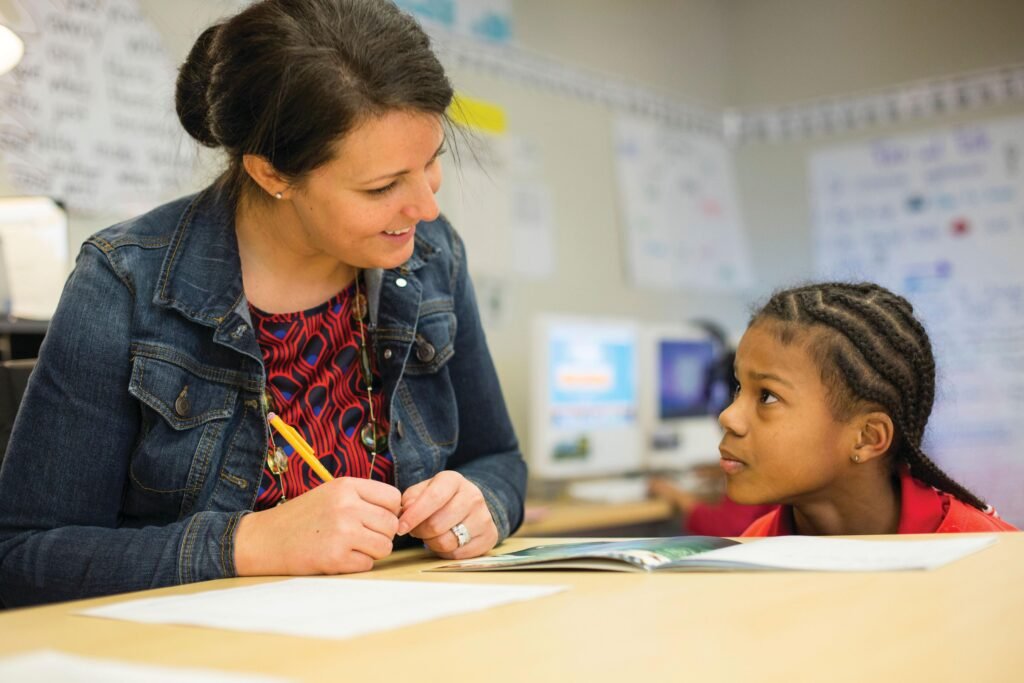
Education is another field where AI can automate supporting tasks without replacing the complete role of the teacher.
AI can create lesson plans, generate practice questions, explain concepts, summarize reading material, and provide personalized exercises. Students can also use AI-powered tutoring systems outside school.
But teaching involves considerably more than delivering information.
Teachers observe students, recognize confusion, manage classrooms, encourage participation, provide feedback, and adapt explanations to different learning styles. They also serve as mentors who can influence confidence, motivation, discipline, and personal development.
A student who struggles with mathematics may not simply need another explanation. They may need encouragement after repeated failures. A teacher can recognize that emotional barrier and adjust the learning approach.
Why Human Teaching Remains Valuable
Teaching requires several capabilities that are difficult to automate completely:
- Mentoring
- Motivation
- Emotional awareness
- Classroom leadership
- Social development
- Personalized feedback
- Conflict management
- Communication with families
The future classroom will likely contain considerably more AI. However, this does not necessarily make teachers less important. Instead, educators may spend less time creating repetitive materials and more time coaching students and designing effective learning experiences.
Teachers who understand how to use AI responsibly may become more productive while maintaining the human relationship at the center of education.
Therapists, Counselors, and Social Workers
Counseling and social work depend heavily on trust, empathy, confidentiality, and relationships. These characteristics make them relatively resistant to complete automation.
AI can generate supportive responses, organize information, and provide educational resources. However, professional counseling often involves understanding a person’s history, emotions, environment, relationships, and changing circumstances.
People do not always communicate their feelings directly. Tone, hesitation, facial expressions, personal experiences, and context can influence what they actually mean.
A trained professional can use these signals alongside professional knowledge and ethical standards.
Empathy and Trust Matter
Human connection remains central to many counseling and social-service roles. Clients may need someone who listens carefully, understands their circumstances, and helps them navigate difficult decisions.
Technology can support professionals with documentation or administrative work, but the responsibility for complex human interactions remains significant.
This does not mean these professions will remain unchanged. AI may become a useful supporting tool. Professionals who learn to combine technology with strong interpersonal skills may become more efficient while spending more time on meaningful client interaction.
Skilled Trades and Hands-On Professions
Electricians, plumbers, mechanics, carpenters, HVAC technicians, construction workers, and field-service professionals are often overlooked in AI discussions.
Many of these occupations happen in environments that are difficult to standardize. A technician may enter an old building with unexpected wiring. A plumber may discover pipes that differ from original plans. A mechanic may need to diagnose a problem using sound, observation, experience, and physical inspection.
Robots work best in predictable environments. Real-world repair and construction work can be much less predictable.
Physical Skills Create an Automation Barrier
AI can help tradespeople diagnose problems, access technical documentation, estimate materials, and plan work. Robotics may also become increasingly useful in construction and manufacturing.
However, many tasks still require dexterity, mobility, improvisation, and physical interaction with unique environments.
This creates an opportunity rather than simply a threat.
A skilled technician who understands modern diagnostic technology may become more productive than someone relying entirely on traditional methods. The combination of trade expertise and technological literacy can therefore provide strong career resilience.
Leadership and Management Roles
Artificial intelligence can analyze business data, prepare presentations, summarize meetings, forecast trends, and recommend decisions. Nevertheless, leadership requires more than information processing.
Managers must motivate teams, resolve disagreements, communicate difficult decisions, allocate resources, and establish priorities.
Leadership becomes especially difficult when information is incomplete. An AI system may recommend an action based on historical patterns, but a human leader must determine whether that recommendation makes sense in the current situation.
Why Leadership Needs People
Leadership involves:
- Strategic judgment
- Communication
- Employee development
- Conflict resolution
- Accountability
- Negotiation
- Organizational culture
- Change management
The World Economic Forum identifies leadership and social influence as important workforce capabilities.
AI may actually increase demand for effective managers because organizations will need people who understand how to coordinate human teams with increasingly automated systems.
The future manager may spend less time preparing reports and more time coaching employees, evaluating AI recommendations, managing change, and making strategic decisions.
Creative Strategy and High-Level Creative Work
Creative careers require a balanced answer because AI is already capable of generating text, images, videos, music, and design concepts.
Routine creative production is therefore vulnerable to automation. However, creative strategy remains more difficult to automate.
A creative director needs to understand a brand’s identity, audience, culture, competitors, business objectives, and long-term positioning. Producing an image is only one part of the process. Deciding what should be created and why requires context and judgment.
Strategic Creativity Is More Resilient
Creative professionals can increase their value by developing skills in:
- Brand strategy
- Creative direction
- Storytelling
- Audience research
- Concept development
- Art direction
- Strategic communication
- Cultural analysis
The World Economic Forum lists creative thinking among important skills for the changing labor market.
The strongest creative professionals will probably use AI for production while concentrating their human effort on ideas, strategy, taste, direction, and decision-making.
Relationship-Based Sales and Business Development
AI can automate lead scoring, email drafting, customer research, scheduling, and basic sales conversations. However, complex sales still depend heavily on relationships.
Enterprise sales, consulting, partnerships, real estate, and high-value services often involve multiple stakeholders and complicated negotiations. Customers may choose a provider because they trust the salesperson, understand the relationship, or believe that person understands their unique problem.
Human Relationships Remain a Sales Advantage
Strong sales professionals can:
- Understand customer motivations
- Negotiate agreements
- Build trust
- Handle objections
- Read interpersonal dynamics
- Coordinate stakeholders
- Adapt communication
- Develop long-term relationships
AI can support these activities, but the human relationship remains valuable.
As automation handles basic prospecting, salespeople may have more time for consultation, negotiation, account management, and strategic partnerships.
Emergency and Unpredictable Field Work
Firefighters, paramedics, emergency technicians, disaster-response workers, and similar professionals operate in environments where conditions can change rapidly.
AI can help emergency teams analyze information, identify hazards, communicate instructions, and monitor situations. Drones and robots may also perform increasingly dangerous tasks.
Yet emergencies are rarely perfectly predictable.
A building fire can involve smoke, structural damage, blocked exits, changing weather, injured people, and equipment failures. Human responders must assess conditions, communicate under pressure, prioritize actions, and adapt when circumstances change.
Real-World Uncertainty Matters
AI is generally easier to deploy in controlled digital environments than unpredictable physical environments.
Emergency professionals combine physical capability with rapid judgment and teamwork. For this reason, the likely future is not necessarily humans versus autonomous systems. Instead, emergency teams may use increasingly advanced technology while humans remain responsible for critical decisions and direct intervention.
Comparison: Jobs More Resistant to Full AI Automation
| Career | AI Impact | Human Advantage | Likely Direction |
|---|---|---|---|
| Healthcare | High augmentation | Care and judgment | Human + AI |
| Education | High augmentation | Mentoring | Human + AI |
| Counseling | Moderate augmentation | Trust and empathy | Human-led |
| Skilled trades | Moderate augmentation | Physical skills | Human + technology |
| Management | High augmentation | Leadership | Human-led + AI |
| Creative strategy | High augmentation | Context and direction | Human + AI |
| Complex sales | High augmentation | Relationships | Human + AI |
| Emergency response | Moderate augmentation | Physical judgment | Human + technology |
How to Build an AI-Resilient Career
Instead of searching for a completely protected occupation, build skills that remain valuable as technology changes.
Step 1: Separate Tasks From Your Job
Write down your regular responsibilities and divide them into repetitive tasks, AI-assisted tasks, and human-centered responsibilities.
Identify which activities are easiest for software to perform. Then look for opportunities to move toward higher-value responsibilities.
Step 2: Build Human-Centered Skills
Develop communication, leadership, negotiation, critical thinking, empathy, creativity, adaptability, and problem-solving.
These capabilities can strengthen your position across multiple industries.
Step 3: Learn AI Tools
Do not avoid AI simply because you are concerned about automation.
Learn how AI works, understand its limitations, and use appropriate tools to improve research, productivity, analysis, and routine work.
Step 4: Develop Specialized Expertise
Deep industry knowledge is valuable because generic information is increasingly easy to generate.
A specialist who understands a particular market, audience, regulation, technology, or customer problem can provide context that generic AI output often lacks.
Step 5: Build a Reputation for Judgment
Results, reliability, communication, and trust can become important professional advantages.
The more your value depends on demonstrated expertise and decision-making, the harder it is to reduce your contribution to an automated task.
Real-World Examples
Consider two marketing professionals.
The first spends most of the day producing basic social-media captions and simple graphics. AI tools can perform much of that work.
The second develops positioning, studies customers, plans campaigns, manages brand strategy, interprets market trends, and works directly with business leaders.
Both are marketers, but their exposure to automation is different.
The same pattern appears in accounting. A professional who performs repetitive data entry may experience substantial automation, while an accountant who advises business owners, interprets financial information, manages risk, and supports strategic decisions may remain highly valuable.
A similar difference exists in software development. Routine code generation is increasingly automated, but architecture, security, product understanding, debugging, and complex problem-solving still require expertise.
This is why the better question is not simply what jobs will AI replace. The more useful question is which responsibilities inside a profession are likely to change and which human capabilities will become more valuable.
Benefits of an AI-Resilient Career
Choosing a career built around human-centered skills can provide several advantages.
Adaptability: Transferable skills such as communication and problem-solving can remain useful even when specific technologies change.
Technology leverage: AI can remove repetitive work and allow professionals to focus on higher-value responsibilities.
Differentiation: Specialized expertise, judgment, and relationships can distinguish professionals from generic automated output.
Leadership opportunities: Organizations adopting AI need people who can manage technology alongside human teams.
Long-term learning: Developing both technical and human capabilities makes it easier to adapt as new tools emerge.
Risks and Limitations
No career can be guaranteed to remain untouched by artificial intelligence.
Robotics could eventually automate more physical work. AI systems may become better at complex reasoning. Business incentives can encourage automation when technology becomes affordable and reliable.
Regulation can also influence adoption. Some industries may introduce AI slowly because mistakes could create serious safety, financial, or legal consequences.
Another risk is assuming that a job is safe simply because it currently requires human interaction. Technology can gradually change the balance of tasks within an occupation.
Therefore, career resilience should be viewed as probability rather than certainty.
Professionals should regularly reassess their skills, industry trends, and technology rather than relying on a permanent list of supposedly safe occupations.
Common Mistakes to Avoid
Mistake 1: Searching for a Completely AI-Proof Job
There is no permanent guarantee. Focus on occupations where human contribution is difficult to automate and develop skills that transfer across industries.
Mistake 2: Assuming Creative Work Is Automatically Safe
AI can already handle many routine creative tasks. Strategic thinking, storytelling, direction, and specialized knowledge are stronger differentiators.
Mistake 3: Avoiding AI
Ignoring AI can reduce productivity and competitiveness. Learning to use AI responsibly can make human-centered professionals more valuable.
Mistake 4: Ignoring Transferable Skills
Job titles can change, but communication, leadership, critical thinking, and relationship management can remain useful across many roles.
Mistake 5: Choosing a Career Only Because It Seems Safe
Career decisions should also consider personal interests, earning potential, education requirements, work environment, and long-term opportunities.
Expert Insight: Human Skills Will Matter More Alongside AI
The future of work is unlikely to be a simple competition between humans and machines. A more realistic model is humans working alongside increasingly capable AI systems.
The World Economic Forum’s Future of Jobs Report 2025 projects significant labor-market disruption by 2030 while also forecasting net job creation. Its skills analysis highlights analytical thinking, resilience, leadership, creative thinking, empathy, technological literacy, and lifelong learning as important capabilities.
This suggests that professionals should develop a combination of technology skills and human strengths.
Someone who knows how to use AI but cannot communicate or make sound decisions may still struggle. Likewise, someone with excellent interpersonal skills who refuses to understand new technology may become less productive.
The strongest combination is domain expertise + human judgment + AI literacy.
For people researching what jobs are safe from AI, this distinction is particularly important. “Safe” should not mean untouched. It should mean that the human contribution remains difficult to remove even as technology becomes more capable.
Resources such as makeainow can also help professionals explore practical applications of AI and understand how emerging tools are changing everyday work.
FAQs
1. What jobs will AI not replace completely?
Healthcare, education, counseling, skilled trades, leadership, emergency services, and relationship-based roles are generally more resistant because they require human judgment, trust, physical presence, or empathy.
2. Will AI replace jobs?
AI will replace some tasks and may eliminate certain roles, but many occupations are more likely to be transformed and augmented than completely removed.
3. Are healthcare careers safe from AI?
Healthcare professionals are likely to remain important because patient care requires physical interaction, communication, ethics, and professional responsibility.
4. Are creative jobs safe from AI?
Routine creative production is vulnerable, but creative strategy, direction, storytelling, and audience understanding remain more difficult to automate completely.
5. What skills should I learn for the AI economy?
Focus on critical thinking, communication, leadership, creativity, adaptability, problem-solving, specialized expertise, and AI literacy.
6. Can AI eventually replace currently resilient jobs?
Possibly. Advances in robotics, AI reasoning, regulation, and business models could change automation levels over time.
Final Verdict
The answer to what jobs will AI not replace is not a permanent list of occupations. It is better understood through the characteristics that make human work difficult to automate.
Jobs requiring empathy, trust, physical presence, leadership, complex judgment, relationship building, strategic creativity, and unpredictable problem-solving are generally more resilient to complete automation.
Healthcare workers, educators, counselors, skilled tradespeople, managers, emergency responders, strategic creatives, and relationship-based professionals are strong examples.
However, resilience does not mean immunity. AI will continue to change these occupations by automating repetitive activities and providing new tools for analysis, communication, and productivity.
The smartest career strategy is therefore not to avoid artificial intelligence. It is to become someone who can use AI while contributing capabilities that AI cannot easily replace.
Build deep expertise. Improve communication. Learn to make decisions under uncertainty. Develop relationships. Strengthen leadership and creativity. Most importantly, learn how technology can support your work.
The future will belong less to people who simply compete against AI and more to professionals who know how to combine human judgment with machine capability. That combination can create a career that is not guaranteed to be AI-proof, but is far more adaptable to the changing world of work.