
What Jobs Will AI Replace? The Complete Guide to AI, Automation, and Future Careers in 2026

Artificial intelligence is no longer a futuristic concept discussed only by technology experts. It has become a practical business tool that is reshaping industries, changing workflows, and influencing hiring decisions around the world. As AI systems become more capable of performing cognitive tasks, many professionals, students, and business owners are asking an important question: what jobs will AI replace?
Table Of Content
- Quick Answer
- Key Takeaways
- Why Are People Asking What Jobs Will AI Replace in 2026?
- How AI Technology Is Changing What Jobs Will AI Replace
- What Jobs Will AI Replace First?
- Will AI Replace Data Entry Specialist Jobs?
- Why AI Will Replace Many Data Entry Jobs
- Will AI Replace Telemarketing Jobs?
- How AI Voice Agents Are Replacing Telemarketing Jobs
- Will AI Replace Customer Service Representative Jobs?
- What Customer Service Jobs Will AI Replace and What Will Remain?
- What White-Collar Jobs Will AI Replace?
- Will AI Replace Bookkeeping and Accounting Clerk Jobs?
- How AI Is Changing Accounting Jobs Instead of Replacing All Accountants
- Will AI Replace Content Writing Jobs?
- Can AI Replace Human Content Writers Completely?
- Will AI Replace Legal Assistant and Paralegal Jobs?
- How AI Is Transforming Legal Support Jobs
- Industries Where AI Will Replace the Most Jobs
- Customer Support Industry
- Financial Services
- Marketing and Advertising
- Administrative Services
- Jobs AI Is Unlikely to Replace
- Healthcare Professionals
- Human Connection Matters in Healthcare
- Skilled Trades
- Physical Complexity Limits Automation
- Teachers and Educators
- Education Requires Human Guidance
- Leadership Roles
- Leadership Involves More Than Analysis
- Step-by-Step Guide to Future-Proofing Your Career Against AI
- Step 1: Understand Your Automation Risk
- Step 2: Learn AI Tools
- Step 3: Build Human-Centric Skills
- Step 4: Continue Learning
- Step 5: Become a Strategic Problem Solver
- Comparison Table: High-Risk vs Low-Risk Careers
- Real-World Examples of AI Replacing Tasks
- Customer Service Automation
- Automated Content Creation
- AI in Banking
- AI-Powered Recruitment
- Benefits of AI Replacing Certain Jobs
- Risks and Limitations of AI Job Replacement
- Workforce Displacement
- Bias and Fairness Issues
- Overreliance on Technology
- Privacy Concerns
- Limited Human Understanding
- Common Mistakes People Make When Thinking About AI and Jobs
- Assuming Every Job Will Disappear
- Ignoring Skill Development
- Underestimating Human Skills
- Believing AI Is Always Accurate
- Expert Insights
- Frequently Asked Questions
- 1. What jobs will AI replace the fastest?
- 2. Will AI replace software developers?
- 3. Which jobs are safest from AI?
- 4. Can AI completely replace human workers?
- 5. How can I protect my career from AI?
- 6. Will AI create new jobs?
- 7. Is AI a threat or an opportunity?
- Final Verdict
The concern is understandable. AI can now write content, analyze data, answer customer inquiries, generate images, summarize documents, and even assist with software development. Companies are increasingly adopting AI-powered tools to improve efficiency, reduce costs, and automate repetitive processes. As a result, certain job roles are becoming less dependent on human labor. Before examining what jobs will AI replace, it helps to understand the technology itself. Our detailed guide on what is AI definition explains how artificial intelligence works and why it is transforming modern workplaces.
However, the future of work is more nuanced than headlines often suggest. AI is unlikely to replace all jobs entirely. Instead, it is expected to automate specific tasks while transforming how people work. Many professions will evolve, requiring workers to develop new skills and collaborate effectively with intelligent systems.
Understanding what jobs will AI replace is essential for anyone planning a career, managing a business, or adapting to technological change. This guide explores which jobs are most vulnerable, which careers are likely to remain secure, and how workers can thrive in an AI-driven economy.
Quick Answer
AI is most likely to replace jobs that involve repetitive, predictable, and rules-based tasks. Occupations such as data entry clerks, telemarketers, bookkeeping assistants, basic customer service representatives, and routine administrative workers face the highest automation risk. Jobs requiring creativity, emotional intelligence, leadership, complex decision-making, and human interaction are far less likely to be fully replaced.
Key Takeaways
- AI primarily replaces tasks rather than entire professions.
- Repetitive and predictable jobs face the highest automation risk.
- Human-centered careers remain relatively secure.
- AI creates new opportunities while eliminating some traditional roles.
- Workers who learn AI-related skills gain a competitive advantage.
- Most organizations will use AI to augment employees rather than replace entire teams.
- Adaptability and continuous learning are becoming critical career assets.
Why Are People Asking What Jobs Will AI Replace in 2026?
The conversation around AI and employment has intensified because AI technology has advanced significantly in a very short period. Unlike previous generations of automation, modern AI can perform tasks that once required human reasoning, communication, and decision-making.
Businesses across industries are investing heavily in AI because it offers several advantages. AI systems can process vast amounts of information, work continuously without fatigue, reduce operational costs, and improve productivity. These benefits make automation attractive to organizations seeking greater efficiency and profitability.

Historically, technological innovation has always changed the labor market. The Industrial Revolution transformed manufacturing, computers changed office work, and the internet reshaped communication and commerce. AI represents the next major shift in workplace technology.
Many workers worry that AI will eliminate jobs entirely. While some occupations may decline, history shows that new technologies often create new categories of work even as they automate existing tasks. The challenge lies in adapting to changing skill requirements rather than resisting technological progress.
Understanding which jobs face automation risk allows individuals to make informed decisions about education, career planning, and professional development. Instead of viewing AI as a threat, workers can view it as a catalyst for acquiring more valuable skills and expanding their opportunities.
Many people also wonder whether AI will eliminate jobs entirely or simply change how work is performed. To explore the broader impact of automation on employment, read our detailed guide on will AI replace jobs.
How AI Technology Is Changing What Jobs Will AI Replace
Traditional automation follows predefined instructions and can only perform tasks according to fixed rules. AI, on the other hand, learns patterns from data and can adapt to different situations. This makes it capable of handling many forms of knowledge work that were previously considered uniquely human.
For example, AI systems can analyze customer conversations, generate reports, create marketing content, detect fraud, and assist with coding. These capabilities extend automation beyond physical labor into cognitive work.
This shift explains why discussions about what jobs will AI replace are becoming increasingly relevant across nearly every industry.
What Jobs Will AI Replace First?
Jobs that involve repetitive workflows, structured information, and predictable decision-making are most vulnerable to AI automation. These roles often follow established procedures that can be translated into algorithms and machine learning models.
Will AI Replace Data Entry Specialist Jobs?
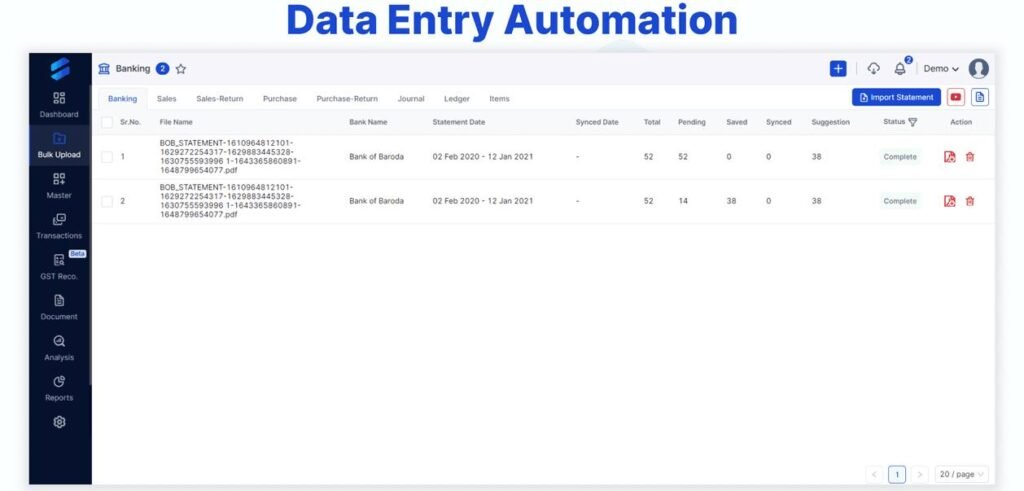
Data entry is one of the most frequently cited occupations when discussing what jobs will AI replace. Modern AI-powered systems can automatically extract information from documents, categorize data, validate entries, and update databases with minimal human intervention.
Organizations now use technologies such as Optical Character Recognition (OCR) and Intelligent Document Processing (IDP) to automate data handling tasks. These systems can process invoices, forms, receipts, and contracts faster and more accurately than humans.
As automation becomes more sophisticated, companies require fewer employees to perform manual data entry. While some oversight remains necessary, the demand for large data-entry teams is expected to decline significantly.
Why AI Will Replace Many Data Entry Jobs
Data entry tasks are highly repetitive and involve structured information. AI systems excel in environments where rules are clear and outcomes are predictable.
Because businesses can achieve substantial cost savings through automation, data entry is among the occupations most likely to experience continued workforce reductions over the coming years.
Will AI Replace Telemarketing Jobs?
Telemarketing is another profession facing substantial disruption from AI technologies.
AI-powered voice systems can conduct outbound calls, qualify leads, answer common questions, schedule appointments, and gather customer feedback. Natural language processing has improved to the point where many automated conversations sound remarkably human.
Businesses appreciate these systems because they operate around the clock and maintain consistent performance.
How AI Voice Agents Are Replacing Telemarketing Jobs
AI voice assistants can handle large call volumes simultaneously while reducing labor costs. Although complex sales conversations still benefit from human interaction, routine outreach activities are increasingly automated.
This trend suggests that telemarketing positions may continue to decline as conversational AI becomes more sophisticated.

Will AI Replace Customer Service Representative Jobs?
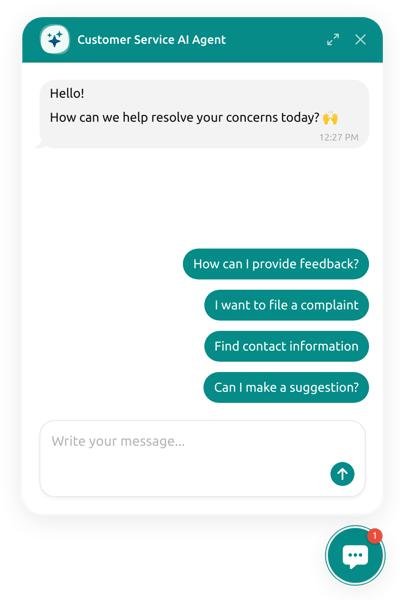
Customer support departments have rapidly adopted AI-powered chatbots and virtual assistants.
These tools can answer frequently asked questions, process refunds, track shipments, and provide account information without human involvement.
By automating routine interactions, businesses reduce support costs and improve response times.
What Customer Service Jobs Will AI Replace and What Will Remain?
Probably not. Many customer situations require empathy, emotional understanding, and nuanced judgment that AI struggles to provide.
Instead of replacing all customer service representatives, AI is more likely to handle routine inquiries while human agents focus on complex cases and relationship-building activities.
While current automation trends offer valuable insights, future developments may accelerate workforce transformation. For a deeper forecast, explore our analysis of what jobs will AI replace by 2030 and the industries expected to see the biggest changes.
What White-Collar Jobs Will AI Replace?
Contrary to popular belief, AI is not limited to automating low-skill occupations. Many white-collar professions are also experiencing significant transformation.
Will AI Replace Bookkeeping and Accounting Clerk Jobs?
Modern accounting software uses AI to automate invoice processing, expense categorization, transaction reconciliation, payroll management, and financial reporting.
Tasks that once required extensive manual effort can now be completed automatically.
This reduces demand for entry-level bookkeeping roles while increasing demand for professionals who provide strategic financial insights.
How AI Is Changing Accounting Jobs Instead of Replacing All Accountants
Accountants who focus on advisory services, business strategy, tax planning, and financial analysis are less vulnerable than those whose work centers on routine recordkeeping.
The profession is shifting toward interpretation and decision support rather than data processing.
Will AI Replace Content Writing Jobs?
Generative AI has dramatically changed the content creation landscape.
AI tools can now produce blog drafts, product descriptions, social media captions, email campaigns, and basic marketing copy within seconds.
This has sparked debate about what jobs will AI replace in the writing industry.
Can AI Replace Human Content Writers Completely?
AI can generate large volumes of content quickly, but it often lacks originality, experience, emotional depth, and strategic insight.
Writers who specialize in thought leadership, investigative journalism, storytelling, expert analysis, and brand strategy remain difficult to replace.
However, content creators who produce simple, repetitive material face increasing competition from AI-generated alternatives.
Will AI Replace Legal Assistant and Paralegal Jobs?
Legal technology platforms use AI to review documents, identify relevant case law, summarize contracts, and organize legal records.
These capabilities automate many administrative tasks traditionally performed by legal assistants.
How AI Is Transforming Legal Support Jobs
Lawyers still provide interpretation, negotiation, advocacy, and strategic guidance that AI cannot fully replicate.
However, routine legal support work may become increasingly automated, reducing demand for certain administrative positions.
Industries Where AI Will Replace the Most Jobs
Some industries are adopting AI faster than others due to the nature of their work and the potential efficiency gains.
Customer Support Industry
Customer support departments were among the earliest adopters of AI-powered chatbots and virtual assistants.
Companies use AI to manage high volumes of inquiries while reducing staffing costs. This trend is expected to continue as conversational AI improves.
Financial Services
Banks, insurance providers, and investment firms use AI for fraud detection, risk assessment, loan processing, and customer support.
Many back-office operations are becoming increasingly automated.
Marketing and Advertising
AI assists with audience analysis, content creation, campaign optimization, and customer segmentation.
While strategic marketing remains human-driven, many operational tasks are becoming automated.
Administrative Services
Scheduling, document management, email handling, and workflow coordination are increasingly supported by AI assistants.
This reduces demand for certain administrative roles while creating opportunities for higher-level operational management.
Jobs AI Is Unlikely to Replace
Although AI can automate many tasks, some professions remain highly resistant to replacement. While many professions face automation risks, some careers remain highly resistant to technological disruption. If you’re exploring long-term career security, this guide on what jobs are safe from AI provides a deeper look at professions expected to remain resilient in the age of automation.
Healthcare Professionals
Doctors, nurses, therapists, and caregivers perform work that requires empathy, trust, ethical judgment, and complex decision-making.
AI can assist healthcare professionals but is unlikely to replace them entirely.
Human Connection Matters in Healthcare
Patients often need emotional support and reassurance in addition to medical expertise. These human qualities remain difficult for AI to replicate effectively.
Skilled Trades
Electricians, plumbers, mechanics, and construction workers operate in dynamic physical environments that require adaptability and hands-on problem-solving.
Physical Complexity Limits Automation
Many skilled trade tasks vary significantly from one situation to another, making full automation challenging and expensive.
Teachers and Educators
AI can support learning through personalized instruction, but education involves mentorship, motivation, and social development.
Education Requires Human Guidance
Students benefit from human relationships, encouragement, and individualized support that extends beyond information delivery.
Leadership Roles
Executives, managers, and entrepreneurs make strategic decisions involving uncertainty, negotiation, and organizational culture.
Leadership Involves More Than Analysis
Successful leaders inspire teams, resolve conflicts, and build trust—qualities that remain deeply human.
Step-by-Step Guide to Future-Proofing Your Career Against AI
Step 1: Understand Your Automation Risk
Analyze which parts of your job are repetitive and predictable. These tasks are most vulnerable to automation.
Step 2: Learn AI Tools
Develop familiarity with AI platforms relevant to your industry. Workers who use AI effectively often outperform those who avoid it.
Step 3: Build Human-Centric Skills
Focus on communication, creativity, leadership, emotional intelligence, and critical thinking.
Step 4: Continue Learning
Invest in professional development, certifications, and emerging technologies.
Step 5: Become a Strategic Problem Solver
Organizations increasingly value employees who can interpret information, make decisions, and create innovative solutions.
Comparison Table: High-Risk vs Low-Risk Careers
| High AI Replacement Risk | Lower AI Replacement Risk |
|---|---|
| Data Entry Clerk | Doctor |
| Telemarketer | Nurse |
| Basic Customer Support | Therapist |
| Bookkeeping Clerk | Teacher |
| Routine Content Writer | Research Scientist |
| Administrative Assistant | Electrician |
| Claims Processor | Plumber |
| Scheduling Coordinator | Entrepreneur |
| Basic Translator | Senior Consultant |
| Invoice Processor | Executive Leader |
Real-World Examples of AI Replacing Tasks
Customer Service Automation
Many companies now use AI chatbots to handle the majority of customer inquiries, reducing the need for large support teams.
Automated Content Creation
Marketing departments use AI tools to generate drafts, social media content, and email campaigns.
AI in Banking
Financial institutions automate fraud detection, transaction monitoring, and customer onboarding processes.
AI-Powered Recruitment
Recruiters increasingly use AI to screen resumes and identify qualified candidates.
Benefits of AI Replacing Certain Jobs
AI-driven automation offers several advantages.
- Higher productivity
- Lower operational costs
- Faster service delivery
- Reduced human error
- Improved scalability
- Greater business efficiency
Organizations can redirect human workers toward higher-value activities that require judgment, creativity, and relationship management.
As AI adoption grows, businesses are increasingly using all-in-one AI platforms to streamline content creation, automation, and productivity tasks. Solutions like MakeAINow provide multiple AI capabilities—including text generation, image creation, code generation, and voice tools—from a single dashboard.
Risks and Limitations of AI Job Replacement
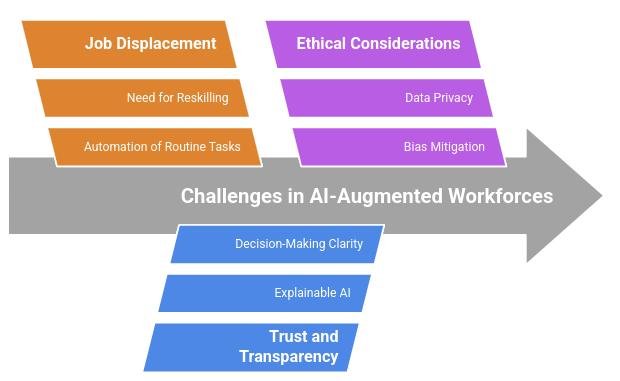
Despite its benefits, AI also presents challenges.
Workforce Displacement
Workers may lose jobs before acquiring new skills.
Bias and Fairness Issues
AI systems can inherit biases from training data.
Overreliance on Technology
Excessive dependence on AI may reduce human expertise.
Privacy Concerns
Many AI systems require large amounts of personal and organizational data.
Limited Human Understanding
AI lacks genuine empathy, consciousness, and emotional awareness.
Common Mistakes People Make When Thinking About AI and Jobs
Assuming Every Job Will Disappear
Most professions will evolve rather than vanish entirely.
Ignoring Skill Development
Workers who fail to adapt face greater career risks.
Underestimating Human Skills
Creativity, empathy, leadership, and strategic thinking remain highly valuable.
Believing AI Is Always Accurate
AI systems still make errors and require human oversight.
Expert Insights
Leading economists and technology researchers generally agree on several key points.
First, AI will automate tasks more frequently than entire occupations.
Second, workers who combine domain expertise with AI skills will enjoy stronger career prospects.
Third, adaptability will become one of the most important professional traits.
The future workforce will likely consist of humans and AI systems working together rather than competing directly.
Organizations that successfully integrate AI while investing in employee development are expected to achieve the best outcomes.
Frequently Asked Questions
1. What jobs will AI replace the fastest?
Data entry, telemarketing, bookkeeping support, routine customer service, and repetitive administrative positions are among the most vulnerable.
2. Will AI replace software developers?
AI can assist developers, but complex architecture, strategic planning, and advanced problem-solving still require human expertise.
3. Which jobs are safest from AI?
Healthcare professionals, teachers, skilled tradespeople, therapists, researchers, and leadership roles are generally considered more resilient.
4. Can AI completely replace human workers?
In most industries, AI is expected to automate specific tasks rather than fully replace human workers.
5. How can I protect my career from AI?
Develop AI literacy, improve human-centered skills, continue learning, and focus on strategic problem-solving.
6. Will AI create new jobs?
Yes. AI is already creating roles related to AI development, governance, training, implementation, and oversight.
7. Is AI a threat or an opportunity?
It can be both. The impact largely depends on how individuals and organizations adapt to technological change.
Final Verdict
The question “what jobs will AI replace“ does not have a simple answer because AI affects tasks more often than entire professions. Jobs involving repetitive, predictable, and rules-based work face the greatest automation risk, while careers requiring creativity, emotional intelligence, leadership, and complex problem-solving remain more resilient.
Rather than viewing AI as a force that will eliminate all employment, it is more accurate to see it as a transformative technology that changes how work is performed. Workers who embrace AI, develop complementary skills, and remain adaptable will be better positioned to succeed in the evolving job market.
The future belongs not to humans or AI alone, but to those who learn how to combine human strengths with artificial intelligence effectively.