

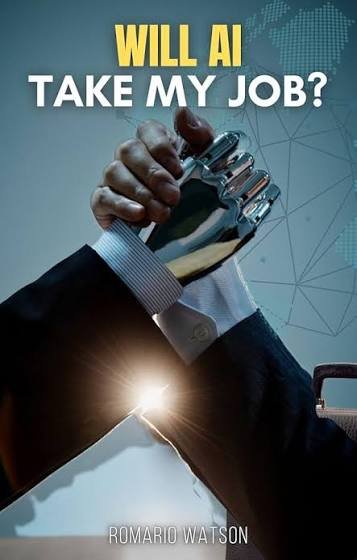

Artificial intelligence is changing how businesses operate, how employees complete daily tasks, and what employers expect from their teams. From writing emails and analyzing data to generating software code and assisting customers, AI-powered tools are becoming part of everyday professional life. For employees, students, freelancers, and people planning their careers, these developments raise important questions about job security and future opportunities.
Table Of Content
- Quick Answer: Will AI Take My Job?
- Key Takeaways
- How AI Is Changing the Workplace
- Which Jobs Face the Greatest Automation Pressure?
- 1. Data Entry and Routine Administrative Work
- 2. Basic Customer Support
- 3. Routine Content and Translation Tasks
- 4. Basic Bookkeeping and Document Processing
- 5. Repetitive Digital Production
- What Jobs Are More Likely to Remain Resilient?
- Healthcare and Patient Care
- Skilled Trades and Field Services
- Education and Training
- Management and Human-Centered Leadership
- Creative Strategy and Complex Problem-Solving
- How to Prepare Your Career for an AI-Driven Future
- Step 1: Review Your Daily Responsibilities
- Step 2: Learn Relevant AI Tools
- Step 3: Develop Skills That Complement Automation
- Step 4: Build Evidence of Your Skills
- Step 5: Keep Learning as Your Industry Changes
- Benefits and Limitations of Workplace AI
- Common Mistakes to Avoid
- FAQs
- 1. Will AI take my job in the next five years?
- 2. Which types of jobs are most exposed to AI?
- 3. Can AI replace software developers?
- 4. Are healthcare jobs protected from AI?
- 5. Should students avoid careers that involve computers?
- 6. How can I make myself more valuable in an AI-driven workplace?
- 7. Will AI create new jobs as well as eliminate existing ones?
- Conclusion
The answer depends on the type of work you do, the tasks involved in your role, and how effectively you adapt to new technology. If you are wondering will ai take my job the outcome depends on several factors, including how your employer adopts AI and whether your responsibilities can be automated. Some repetitive activities can already be completed faster with AI, while other responsibilities still rely heavily on human judgment, communication, creativity, and physical skills. The International Labour Organization (ILO) reported in May 2025 that approximately one in four workers worldwide were in occupations with some exposure to generative AI. However, its research concluded that job transformation was more likely than complete job replacement for most occupations.
Understanding these changes can help you make informed career decisions instead of reacting to fear or speculation. This guide explains the jobs most exposed to AI, the careers that may be more resilient, and the practical steps you can take to remain valuable in an evolving workplace.
Quick Answer: Will AI Take My Job?
AI may automate some responsibilities within your job, but that does not automatically mean your entire position will disappear. Roles involving predictable, repetitive, and digitally processed tasks may experience greater automation pressure. Jobs requiring human interaction, accountability, complex decision-making, or physical work in unpredictable environments may be harder to automate completely.
Your career prospects will depend on how your employer adopts AI, how your industry changes, and whether you develop skills that complement the technology.
Key Takeaways
- AI is more likely to change many existing jobs than eliminate every position within an affected occupation.
- Repetitive administrative, data-processing, and content-production tasks may face greater automation pressure.
- Healthcare, skilled trades, education, and people-focused professions contain responsibilities that remain challenging to automate completely.
- Technical knowledge alone is not enough; critical thinking, communication, adaptability, and problem-solving are valuable complementary skills.
- Learning to use AI responsibly can help workers improve productivity and prepare for changing job requirements.
- No career is guaranteed to remain unaffected by future technological developments.
How AI Is Changing the Workplace
AI systems can generate text, summarize documents, recognize patterns, answer common questions, and support decision-making. Businesses use these capabilities to reduce manual effort, process information more quickly, and improve certain workflows.
For example, a marketing professional might use AI to generate initial campaign ideas, while a human specialist checks accuracy, understands the audience, and develops the final strategy. Similarly, a software developer can use AI to draft code but still needs to test functionality, investigate errors, and consider security.
This distinction matters because a job consists of multiple tasks rather than one isolated activity. Automating one task does not necessarily remove the need for the employee performing it.
Research published by the ILO in 2025 also identified increasing exposure in some highly digitized professional, media, and web-related activities. The practical implication is that workers should assess how their actual responsibilities may change instead of assuming that only low-skilled occupations face disruption.
Which Jobs Face the Greatest Automation Pressure?
When considering will ai replace jobs it is important to distinguish between automating individual tasks and replacing entire roles. The greatest pressure may occur where work follows clear rules, involves large volumes of digital information, and requires limited human judgment.
1. Data Entry and Routine Administrative Work
Data entry clerks and administrative assistants may spend considerable time transferring information, updating records, organizing documents, and preparing standard reports. AI and workflow automation tools can assist with these activities.
However, employees who handle confidential information, resolve unusual cases, coordinate people, and check data quality may continue to provide important value.
2. Basic Customer Support
AI chatbots can respond to frequently asked questions, explain standard procedures, and guide customers through simple processes. Businesses may use these systems to manage common requests before transferring complex cases to human representatives.
Customer support professionals can strengthen their position by developing conflict resolution, empathy, product knowledge, and relationship-management skills.
3. Routine Content and Translation Tasks
AI tools can draft product descriptions, summarize articles, create simple marketing copy, and translate straightforward text. When considering what jobs will ai replace roles focused on repetitive content creation and basic translation may face greater automation pressure, although human creativity, accuracy, and editorial judgment remain important.
Nevertheless, original research, editorial judgment, brand positioning, cultural understanding, and fact-checking remain important. Professionals who combine AI-assisted production with subject expertise may offer more value than those who only produce generic material.
4. Basic Bookkeeping and Document Processing
Software can categorize transactions, extract information from invoices, and identify inconsistencies in financial records. These capabilities may reduce manual work in some accounting and bookkeeping processes.
Financial professionals still need to interpret unusual transactions, review compliance requirements, investigate discrepancies, and exercise professional judgment.
5. Repetitive Digital Production
Certain entry-level coding, document formatting, image editing, and report-generation tasks can be assisted by AI. The impact will vary according to the complexity of the assignment and the quality of the tools being used.
Workers should focus on learning the principles behind their work rather than depending entirely on automated outputs.
What Jobs Are More Likely to Remain Resilient?
People often ask what jobs are safe from ai because they want a career with greater long-term stability. No occupation is completely immune to technological change, but some responsibilities are harder to automate because they involve physical adaptability, human trust, complex judgment, or unpredictable situations.
Healthcare and Patient Care
Nurses, doctors, physiotherapists, and other healthcare professionals combine technical knowledge with patient interaction, ethical decisions, and individualized care. AI can help analyze information and support clinical workflows, but professional oversight and human responsibility remain essential.
Skilled Trades and Field Services
Electricians, plumbers, mechanics, and maintenance technicians work in environments that differ from one assignment to another. Diagnosing unexpected problems, handling tools safely, and adapting to physical conditions can be difficult to automate consistently.
AI may still support scheduling, diagnostics, documentation, and training in these industries.
Education and Training
Teachers, tutors, and trainers do more than deliver information. They assess understanding, motivate learners, respond to individual needs, and create supportive learning environments.
AI can assist with lesson planning and practice exercises, while educators provide guidance, context, and interpersonal support.
Management and Human-Centered Leadership
Managers coordinate teams, resolve disagreements, negotiate priorities, and make decisions that affect people and organizations. AI can analyze performance data or prepare recommendations, but effective leadership also requires accountability, communication, and an understanding of organizational context.
Creative Strategy and Complex Problem-Solving
Creative directors, researchers, consultants, and experienced specialists often work with ambiguous problems that do not have a single predefined answer. AI can help generate ideas and explore possibilities, but humans remain important for setting objectives, evaluating trade-offs, and determining what is appropriate.
How to Prepare Your Career for an AI-Driven Future
You do not need to become an AI engineer to remain competitive. A practical approach is to combine your existing expertise with an understanding of AI tools and the human skills needed to use them effectively.
Step 1: Review Your Daily Responsibilities
List the tasks you complete each week. Identify which activities are repetitive, which require judgment, and which depend on personal interaction.
For example, a recruiter may automate interview scheduling but still need to assess candidates, understand hiring managers’ expectations, and build professional relationships.
Step 2: Learn Relevant AI Tools
Choose tools that support your actual work. Depending on your profession, these might include AI writing assistants, spreadsheet automation, coding assistants, transcription software, or research tools.
Learn how to verify outputs, protect confidential information, and recognize inaccurate or biased results.
Step 3: Develop Skills That Complement Automation
Focus on communication, critical thinking, negotiation, creativity, decision-making, and problem-solving. These abilities help you evaluate AI-generated work and apply it to real business needs.
Technical skills are valuable, but their usefulness increases when you can connect them to practical outcomes.
Step 4: Build Evidence of Your Skills
Create projects, document measurable improvements, or develop a portfolio that demonstrates how you solve problems. A marketer might show how AI-assisted research improved a campaign workflow, while an analyst might demonstrate a more efficient reporting process.
Avoid sharing confidential employer information when creating examples.
Step 5: Keep Learning as Your Industry Changes
Set aside regular time to review new tools, industry developments, and job descriptions. Speak with colleagues and managers about emerging responsibilities and the skills employers increasingly request.
Continuous learning is more effective when it follows a clear career goal rather than chasing every new AI product.
Benefits and Limitations of Workplace AI
AI can help employees complete routine tasks faster, organize information, explore ideas, and reduce some repetitive workloads. For businesses, these capabilities may improve productivity and allow teams to concentrate on more complex responsibilities.
However, AI also has limitations. Systems can produce inaccurate information, misunderstand context, reflect biases, and mishandle sensitive data if used carelessly. Automated decisions may also create accountability and fairness concerns.
The effect on employment is not determined by technology alone. It also depends on business decisions, implementation costs, regulations, customer expectations, and whether employers invest in training workers.
For employees, the most useful strategy is to understand both the advantages and the risks of AI instead of treating it as either a perfect solution or an inevitable threat.
Common Mistakes to Avoid
Assuming every AI-exposed job will disappear: Exposure means technology can affect some work activities, not that every position will be eliminated.
Ignoring AI completely: Avoiding relevant tools may make certain tasks more difficult or time-consuming as workplace expectations change.
Trusting every AI-generated answer: Always verify facts, calculations, citations, and recommendations before using them professionally.
Learning tools without a clear purpose: Select technology that addresses real problems in your current role or desired career.
Neglecting human skills: Technical knowledge must be supported by sound judgment, communication, reliability, and the ability to work with others.
Waiting until change becomes unavoidable: Regularly reviewing your responsibilities and developing new skills gives you more time to respond to changing expectations.
FAQs
1. Will AI take my job in the next five years?
There is no reliable way to predict the outcome for every individual job. The risk depends on your responsibilities, industry, employer, and how AI develops. Review your daily tasks and learn how relevant tools could change them.
2. Which types of jobs are most exposed to AI?
Roles involving repetitive digital tasks, routine document processing, basic content production, and standardized customer interactions may experience greater exposure. The actual impact varies by occupation and workplace.
3. Can AI replace software developers?
AI can generate code, suggest fixes, and assist with testing. However, software development also involves requirements analysis, system design, security, debugging, and responsibility for reliable products. The balance between automated and human work will continue to evolve.
4. Are healthcare jobs protected from AI?
Healthcare professionals may benefit from AI-assisted documentation, information analysis, and administrative support. Patient care, complex clinical judgment, communication, and professional accountability remain important, although individual tasks and roles may change.
5. Should students avoid careers that involve computers?
No. Digital and technical careers can still offer opportunities, but students should build strong fundamentals alongside AI literacy, communication, and problem-solving. The goal is to adapt to changing requirements rather than avoid technology.
6. How can I make myself more valuable in an AI-driven workplace?
Understand your field, learn relevant AI tools, verify their outputs, improve your communication and analytical abilities, and demonstrate how your work solves real problems. Combining domain expertise with practical AI skills can help you stand out.
7. Will AI create new jobs as well as eliminate existing ones?
AI adoption can create demand for new responsibilities and specialized skills, while reducing demand for certain tasks. The balance is uncertain and will vary across industries, regions, and time periods.
Conclusion
Artificial intelligence is changing the nature of work, but its impact will not be identical across occupations. Some tasks may become automated, some positions may evolve, and new responsibilities may emerge as businesses adopt different technologies.
If you are wondering will ai take my job focus on what you can influence. Assess your current responsibilities, understand where AI can help, strengthen your professional expertise, and develop skills that support good judgment and effective collaboration.
Career resilience does not come from finding a job that will never change. It comes from being prepared to learn, adapt, and solve problems as expectations evolve. By combining relevant technology skills with human insight and practical experience, you can make more informed decisions about your future of work.

