



How Do I Use AI? A Practical Beginner’s Guide to Using Artificial Intelligence in Everyday Life

Artificial Intelligence (AI) has quickly become one of the most transformative technologies of the modern era. From writing emails and creating content to analyzing data and automating business processes, Artificial Intelligence is changing how individuals and organizations work. Yet despite its growing popularity, many people still ask a simple question: How do I use AI?
Table Of Content
- Quick Answer
- Key Takeaways
- What Is AI and How Does It Work?
- Why More People Are Using Artificial Intelligence Today
- How Do I Use Artificial Intelligence? Step-by-Step Guide
- Step 1: Identify Your Goal
- Step 2: Select the Right AI Tool
- Step 3: Write a Detailed Prompt
- Step 4: Review the Output
- Step 5: Refine and Improve
- Step 6: Implement Responsibly
- Common Ways to Use Artificial Intelligence in Everyday Life
- Learning and Education
- Content Creation
- Business Productivity
- Personal Organization
- Creative Projects
- Comparison of Popular AI Use Cases
- Real-World Examples of AI in Action
- Benefits of Using Artificial Intelligence
- Increased Productivity
- Enhanced Creativity
- Better Decision-Making
- Cost Efficiency
- Accessibility
- Continuous Availability
- Risks and Limitations of AI
- Accuracy Issues
- Lack of Human Judgment
- Privacy Concerns
- Bias in Outputs
- Dependency Risks
- Regulatory Challenges
- Common Mistakes When Using AI
- Expert Insights: How to Get Better Results From AI
- Frequently Asked Questions
- 1. Can beginners use AI without coding?
- 2. What is the easiest way to start using AI?
- 3. Is Artificial Intelligence free to use?
- 4. Can AI replace human jobs?
- 5. How accurate is AI?
- 6. Can AI help with studying?
- 7. Is it safe to share personal information with AI?
- 8. What industries benefit most from AI?
- 9. How can I improve AI-generated results?
- 10. What is the biggest limitation of AI?
- Final Verdict
The good news is that you no longer need programming skills or technical expertise to benefit from Artificial Intelligence. Modern AI tools are designed for everyday users, allowing students, professionals, entrepreneurs, marketers, and creators to complete tasks faster and more efficiently. Whether you want to generate ideas, improve productivity, learn new skills, create images, automate repetitive work, or make better decisions, Artificial Intelligence can become a valuable assistant.
Understanding how to use AI effectively is not about replacing human intelligence. Instead, it is about combining human creativity, judgment, and expertise with machine-powered capabilities. When used correctly, AI can help save time, reduce errors, increase efficiency, and unlock new opportunities.
This guide explains what AI is, how it works, practical ways to use it, common mistakes to avoid, and how beginners can start using AI confidently in daily life.
Quick Answer
You can use AI by choosing an AI tool that matches your goal, providing clear instructions (prompts), reviewing the output, and refining the results. Artificial Intelligence can help with writing, research, learning, business tasks, coding, image creation, customer support, productivity, and automation.
Key Takeaways
- Artificial Intelligence can be used without coding knowledge.
- Most AI tools work through simple text prompts.
- AI improves productivity, creativity, and decision-making.
- Different Artificial Intelligence tools serve different purposes.
- Human oversight is essential for accuracy and quality.
- Effective prompting significantly improves AI results.
- Artificial Intelligence works best as a collaborator rather than a replacement for human expertise.
- Understanding limitations helps prevent costly mistakes.
What Is AI and How Does It Work?
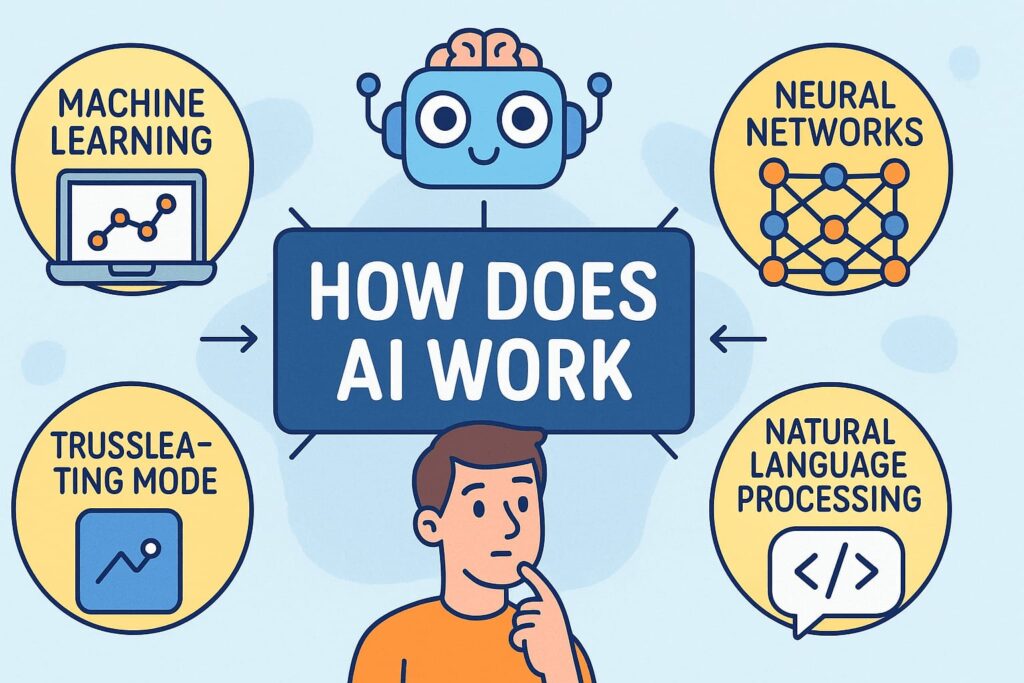
Artificial Intelligence refers to computer systems that can perform tasks that typically require human intelligence. If you’re new to the concept, understanding what is AI can help you better understand how these systems work. These tasks include understanding language, recognizing patterns, generating content, solving problems, making predictions, and learning from data.
Modern AI systems rely on technologies such as machine learning, deep learning, natural language processing (NLP), computer vision, and generative AI. These technologies allow AI tools to process vast amounts of information and produce useful outputs based on user inputs.
When people interact with AI tools today, they are usually engaging with large language models (LLMs) or specialized AI systems. Popular tools such as ChatGPT belong to the generative AI category, which leads many users to ask is chatgpt generative ai and how these models create content. For example, AI writing assistants can generate articles, answer questions, summarize documents, and assist with brainstorming. Image-generation tools can create visual content from text descriptions. AI-powered analytics platforms can identify trends and provide recommendations.
The key concept behind Artificial Intelligence usage is the prompt. A prompt is simply an instruction you provide to the AI. The quality of the output often depends on how clearly the prompt is written. For example:
Weak Prompt:
“Write about marketing.”
Strong Prompt:
“Write a beginner-friendly guide explaining digital marketing strategies for small business owners, including SEO, social media marketing, and email marketing.”
The second prompt gives Artificial Intelligence more context and direction, resulting in a higher-quality response.
AI does not think like humans. It predicts and generates outputs based on patterns learned from training data. This means users should always verify information, especially when making important business, financial, legal, or medical decisions.
Understanding this foundation helps users maximize AI’s strengths while avoiding common misconceptions about what Artificial Intelligence can and cannot do.
Why More People Are Using Artificial Intelligence Today
AI adoption has accelerated because it solves practical problems that people encounter every day. Businesses use AI to improve efficiency, students use it for learning support, and professionals use it to automate repetitive work.
One major reason Artificial Intelligence has become popular is accessibility. Previously, advanced technology often required technical knowledge or specialized software. Today’s AI platforms allow users to interact using natural language, making sophisticated capabilities available to almost anyone with internet access.
Another reason is productivity. Many tasks that once took hours can now be completed in minutes. Drafting emails, creating reports, generating ideas, summarizing research, organizing information, and creating visual assets can all be significantly accelerated through AI assistance.
Businesses also benefit from reduced operational costs. Customer service chatbots, workflow automation tools, predictive analytics platforms, and AI-powered marketing solutions enable organizations to scale operations without proportionally increasing expenses.
Artificial Intelligence also enhances creativity rather than simply automating work. Writers use AI to overcome creative blocks. Designers generate concept ideas more quickly. Entrepreneurs explore new business opportunities. Developers accelerate coding workflows. Educators create personalized learning experiences.
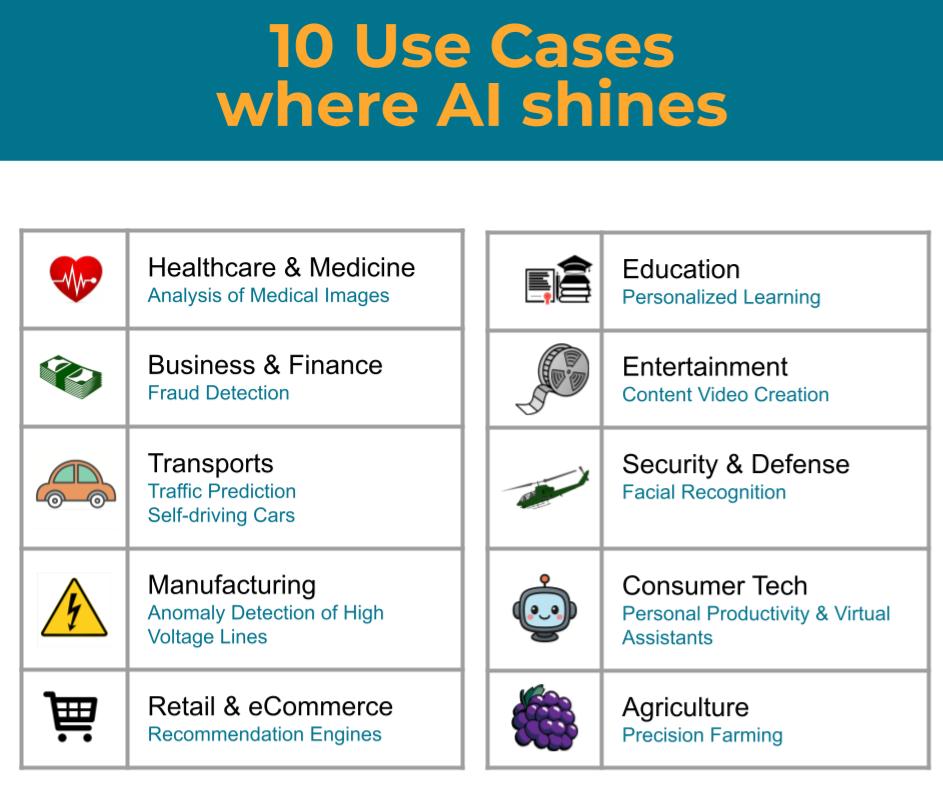
Furthermore, AI’s ability to analyze large datasets allows users to uncover insights that might otherwise remain hidden. This capability supports better decision-making across industries such as healthcare, finance, education, manufacturing, and marketing.
As AI technology continues to improve, its applications become increasingly practical for everyday users. The focus is shifting from whether people should use AI to how they can use it responsibly and effectively.
How Do I Use Artificial Intelligence? Step-by-Step Guide
Using Artificial Intelligence effectively is a skill that anyone can learn. Following a structured process can help beginners achieve better results and avoid frustration.
Step 1: Identify Your Goal
Before selecting an AI tool, determine what you want to accomplish. Your goal might be:
- Writing content
- Learning a topic
- Generating images
- Analyzing data
- Automating tasks
- Coding software
- Creating presentations
- Conducting research
A clear objective helps you choose the right AI solution.
Step 2: Select the Right AI Tool
Different AI platforms specialize in different functions. If you’re unsure where to begin, exploring the best AI app for your specific needs can help you choose the right tool faster.
| Purpose | Recommended AI Category |
|---|---|
| Writing | AI Writing Assistants |
| Research | AI Research Tools |
| Coding | AI Coding Assistants |
| Design | AI Image Generators |
| Productivity | AI Workflow Tools |
| Customer Support | AI Chatbots |
Choosing the correct tool improves efficiency and output quality.
Step 3: Write a Detailed Prompt
Prompt quality directly impacts AI performance.
Include:
- Context
- Desired outcome
- Audience
- Format
- Tone
- Length
Example:
“Create a 1,000-word beginner guide explaining email marketing for small businesses using a professional and easy-to-understand tone.”
The more specific the request, the better the result.
Step 4: Review the Output
Artificial Intelligence -generated content should never be accepted blindly.
Check for:
- Accuracy
- Relevance
- Clarity
- Missing information
- Biases
- Formatting issues
Human review remains essential.
Step 5: Refine and Improve
Artificial Intelligence conversations are iterative. Ask follow-up questions and request revisions.
Examples:
- “Expand section three.”
- “Add practical examples.”
- “Make the explanation simpler.”
- “Include statistics.”
Repeated refinement often produces significantly better outcomes.
Step 6: Implement Responsibly
Use Artificial Intelligence as a support tool rather than a replacement for critical thinking. Verify facts, protect sensitive information, and ensure compliance with relevant regulations and ethical standards.
Common Ways to Use Artificial Intelligence in Everyday Life
AI applications extend far beyond technology companies. Everyday users are finding practical ways to integrate Artificial Intelligence into their personal and professional routines.
Learning and Education
Students use Artificial Intelligence to understand complex concepts, summarize study materials, generate practice questions, and improve writing skills. AI can function as a personalized tutor by providing explanations tailored to different learning styles.
Professionals also use AI for continuous learning. Whether studying business strategy, programming, finance, marketing, or language skills, Artificial Intelligence can accelerate knowledge acquisition by breaking down difficult topics into simpler explanations.

Content Creation
Content creators use AI for brainstorming, outlining, drafting articles, generating social media posts, writing scripts, and creating marketing materials. Many creators also look for ways to get AI to write like a human so their content feels more authentic and engaging. AI reduces the time spent on repetitive content tasks while allowing creators to focus on strategy and originality.
Businesses increasingly rely on AI-powered content workflows to scale content production while maintaining quality standards.

Business Productivity
Organizations use Artificial Intelligence to automate administrative tasks, generate reports, analyze customer feedback, schedule meetings, manage customer relationships, and streamline communication.
Employees often save hours each week by automating repetitive work. This allows teams to focus on higher-value activities such as problem-solving, innovation, and relationship building.

Personal Organization
AI-powered assistants help manage calendars, prioritize tasks, create reminders, organize notes, and improve time management. Individuals can use Artificial Intelligence to increase productivity and reduce mental overload.
Creative Projects
AI image generators, music tools, and design platforms enable users to create professional-quality assets without advanced technical skills. These tools support creative experimentation and rapid prototyping.
As Artificial Intelligence capabilities continue expanding, the number of practical use cases grows across nearly every industry and profession.
Comparison of Popular AI Use Cases
| Use Case | Primary Benefit | Best For |
| Content Writing | Faster content creation | Writers, marketers |
| Research Assistance | Information gathering | Students, professionals |
| Image Generation | Visual creation | Designers, creators |
| Coding Support | Faster development | Developers |
| Data Analysis | Better insights | Analysts, businesses |
| Customer Service | Automation | Companies |
| Education | Personalized learning | Students |
| Productivity | Time savings | Everyone |
Real-World Examples of AI in Action
Understanding Artificial Intelligence becomes easier when viewed through practical examples.
A freelance writer may use AI to generate article outlines, research ideas, and headline variations. Instead of spending hours planning content, the writer can focus on editing and adding expertise.
A small business owner might use Artificial Intelligence to draft marketing emails, create social media content, analyze customer reviews, and automate customer support responses. This allows limited resources to achieve greater impact.
A student preparing for exams could ask Artificial Intelligence to summarize chapters, generate quizzes, explain difficult concepts, and create study schedules. AI acts as a supplemental learning resource.
Software developers frequently use Artificial Intelligence coding assistants to generate code snippets, debug errors, explain programming concepts, and accelerate development processes.
Marketing teams use Artificial Intelligence to analyze audience behavior, optimize advertising campaigns, personalize customer experiences, and identify emerging trends.
Healthcare professionals increasingly use Artificial Intelligence -powered systems to assist with diagnostics, documentation, scheduling, and administrative workflows.
These examples demonstrate that AI is not limited to one profession or industry. Its versatility makes it valuable across a wide range of personal and professional activities.
Benefits of Using Artificial Intelligence
Artificial Intelligence offers numerous advantages when implemented thoughtfully.
Increased Productivity
AI automates repetitive tasks, allowing users to accomplish more in less time. Routine activities that once required hours can often be completed within minutes.
Enhanced Creativity
Artificial Intelligence serves as a brainstorming partner by generating ideas, alternative approaches, and creative concepts. This can help overcome mental blocks and inspire innovation.
Better Decision-Making
By analyzing large datasets and identifying patterns, AI supports more informed decision-making. Businesses can gain valuable insights into customer behavior, market trends, and operational performance.
Cost Efficiency
Organizations often reduce operational expenses by automating tasks previously performed manually. This efficiency can improve profitability and scalability.
Accessibility
AI makes advanced capabilities available to users regardless of technical expertise. Individuals can access powerful tools through simple conversational interfaces.
Continuous Availability
Unlike human assistants, Artificial Intelligence systems can provide support around the clock. This availability improves responsiveness and operational flexibility.
When combined with human judgment and expertise, these benefits can produce significant improvements in productivity and performance.
Risks and Limitations of AI
While AI offers substantial benefits, it also has important limitations that users should understand.
Accuracy Issues
AI can occasionally generate incorrect or misleading information. This phenomenon, sometimes called hallucination, occurs when Artificial Intelligence produces plausible but inaccurate outputs.
Users should verify critical facts, especially in professional environments where accuracy matters.
Lack of Human Judgment
AI lacks genuine understanding, emotional intelligence, and contextual awareness. It cannot fully replace human expertise in complex decision-making situations.
Privacy Concerns
Submitting sensitive personal or business information to AI platforms may create privacy risks. Users should understand data policies before sharing confidential information.
Bias in Outputs
AI systems can reflect biases present in training data. This may influence recommendations, generated content, or decision-support outputs.
Dependency Risks
Overreliance on Artificial Intelligence can reduce critical thinking and problem-solving skills. Users should maintain independent judgment rather than accepting AI outputs unquestioningly.
Regulatory Challenges
AI regulations continue evolving globally. Businesses must remain aware of legal, ethical, and compliance requirements when deploying Artificial Intelligence solutions.
Understanding these limitations enables more responsible and effective AI adoption.
Common Mistakes When Using AI
Many beginners fail to achieve optimal results because they make avoidable mistakes.
One common error is providing vague prompts. General requests often produce generic outputs. Detailed instructions consistently yield better responses.
Another mistake is assuming AI is always correct. Users should verify information, especially when accuracy is essential.
Some individuals attempt to use one AI tool for every task. Different platforms have different strengths, making tool selection important.
Ignoring privacy considerations can also create risks. Sensitive business information, financial data, and confidential records should not be shared carelessly.
Many users fail to refine outputs. AI-generated content often improves significantly through iterative feedback and revisions.
Finally, relying entirely on AI creativity can reduce originality. The best results typically emerge when human expertise and AI capabilities work together.
Avoiding these mistakes helps users achieve better outcomes while minimizing risks.
Expert Insights: How to Get Better Results From AI
Experienced AI users consistently follow several best practices.
First, treat AI as a collaborator rather than an oracle. Ask questions, request alternatives, and challenge outputs.
Second, provide context-rich prompts. Include audience information, goals, constraints, preferred formats, and examples whenever possible.
Third, use iterative prompting. Instead of expecting perfect results immediately, improve outputs through multiple rounds of refinement.
Fourth, combine AI-generated content with personal expertise. Original insights, industry experience, and human judgment create more valuable outcomes.
Fifth, stay informed about emerging AI tools and capabilities. The AI landscape evolves rapidly, and new solutions frequently offer improved functionality.
Experts also recommend developing AI literacy skills. Understanding how AI systems work helps users identify strengths, weaknesses, and appropriate use cases.
The most successful AI users are not necessarily technical experts. They are individuals who understand how to communicate effectively with AI and critically evaluate the results.
Frequently Asked Questions
1. Can beginners use AI without coding?
Yes. Most modern AI tools are designed for non-technical users and require no programming knowledge.
2. What is the easiest way to start using AI?
Begin with a conversational AI assistant and use it for simple tasks such as writing, research, or learning.
3. Is Artificial Intelligence free to use?
Many AI platforms offer free plans, although premium versions often provide advanced capabilities and higher usage limits.
4. Can AI replace human jobs?
AI may automate certain tasks, but it is more likely to transform jobs by changing how work is performed rather than eliminating all positions.
5. How accurate is AI?
Accuracy varies depending on the tool, task, and prompt quality. Important information should always be verified.
6. Can AI help with studying?
Yes. Artificial Intelligence can explain concepts, create study materials, summarize information, and generate practice questions.
7. Is it safe to share personal information with AI?
Users should avoid sharing highly sensitive or confidential information unless they understand the platform’s privacy policies.
8. What industries benefit most from AI?
Healthcare, finance, education, marketing, software development, manufacturing, and customer service all benefit significantly from Artificial Intelligence technologies.
9. How can I improve AI-generated results?
Use detailed prompts, provide context, review outputs carefully, and refine responses through follow-up instructions.
10. What is the biggest limitation of AI?
Artificial Intelligence lacks genuine understanding and can sometimes generate inaccurate information, making human oversight essential.
Final Verdict
If you’re wondering, “How do I use AI?” the answer is simpler than many people expect. Start by identifying your goal, selecting the right AI tool, providing clear instructions, reviewing the results, and refining outputs as needed.
Artificial Intelligence is no longer reserved for technology experts. Students, professionals, entrepreneurs, creators, and businesses can all use AI to improve productivity, enhance creativity, automate tasks, and make better decisions. However, successful Artificial Intelligence usage requires responsible implementation, critical thinking, and human oversight.

The future belongs to individuals who learn how to work alongside Artificial Intelligence rather than compete against it. By understanding both the strengths and limitations of artificial intelligence, users can unlock significant value while maintaining control over the decision-making process.
In practical terms, the best way to start using Artificial Intelligence is simply to begin. Choose a task, experiment with an AI tool, learn through experience, and gradually build confidence as your skills improve.