






Why do some AI-generated articles feel natural and engaging while others sound obviously robotic? The answer usually isn’t the AI tool itself—it’s how it’s being used. If you’re wondering how to get AI to write like a human, the good news is that a few simple changes can dramatically improve the quality of your content.
Table Of Content
- Quick Answer
- Key Takeaways
- Why AI Cannot Naturally Write Like a Human
- The Difference Between Human and AI Writing
- How to Get AI to Write Like a Human: Core Principles
- Give AI a Human Writing Role
- Define Your Audience for More Human-Like AI Writing
- Use Conversational Prompts to Make AI Sound Human
- Create Natural Sentence Variety in AI Content
- Step-by-Step Process to Get AI Writing Like a Human
- Step 1: Start With Detailed Instructions
- Step 2: Include Style References
- Step 3: Ask for Stories and Examples
- Step 4: Remove AI Clichés
- Step 5: Edit for Personality
- Comparison Table: Human Writing vs AI Writing
- Examples of AI Writing That Sounds Human
- Example 1: Blog Content
- Example 2: Email Marketing
- Example 3: Social Media Content
- Benefits of Learning How to Get AI to Write Like a Human
- Risks When Trying to Make AI Write Like a Human
- Hallucinations and Inaccuracies
- Lack of Genuine Experience
- Generic Outputs
- Over-Reliance on Automation
- Voice Inconsistency
- Common Mistakes That Prevent AI From Writing Like a Human
- Using Generic Prompts for AI Writing
- Publishing AI Content Without Human Editing
- Ignoring Human Writing Style and Audience Intent
- Over-Optimizing AI Content for Keywords
- Focusing Only on Word Count
- Expert Tips to Get AI to Write More Like a Human
- FAQs About How to Get AI to Write Like a Human
- 1. Can AI truly write exactly like a human?
- 2. Which AI tool writes most like a human?
- 3. Do search engines penalize AI content?
- 4. Should I edit AI-generated content?
- 5. How can I make AI sound less robotic?
- 6. Why does AI repeat itself?
- 7. Can AI create emotional content?
- 8. Is AI writing good for blogging?
- 9. How long should prompts be?
- 10. What is the biggest factor in human-like AI writing?
- Final Verdict
Artificial intelligence has transformed content creation, making it possible to generate articles, emails, social media posts, marketing copy, and even books in minutes. However, readers today expect more than grammatically correct text. They want content that feels authentic, relatable, and written with genuine understanding.
Whether you’re a blogger, marketer, business owner, student, freelancer, or content creator, learning how to get AI to write like a human can dramatically improve content quality, audience engagement, and trust. If you’re new to artificial intelligence tools, you may also want to learn how do I use AI effectively before applying advanced writing techniques.
This guide explains proven methods, real-world examples, common mistakes, expert strategies, and practical workflows that help AI-generated content feel natural, authentic, and genuinely useful.
Quick Answer
To get AI to write like a human, provide detailed context, define a specific audience, use conversational prompts, include personal experiences, request varied sentence structures, avoid generic language, and always edit the final output. Human-like AI writing comes from effective prompting combined with human oversight rather than relying entirely on AI-generated drafts.
Key Takeaways
- AI sounds more human when given detailed instructions.
- Audience-specific prompts improve writing quality.
- Personal stories and examples make content authentic.
- Conversational language increases engagement.
- Editing remains essential for natural flow.
- Human-like content prioritizes clarity over complexity.
- Strong prompts often matter more than the AI tool itself.
- Consistency in tone and voice improves readability.
- Real-world examples create credibility.
- AI performs best when collaborating with humans rather than replacing them.
Why AI Cannot Naturally Write Like a Human
AI writing tools are trained on enormous datasets containing books, websites, articles, forums, and other text sources. While this allows them to generate coherent content, they frequently default to patterns that prioritize predictability over originality.
The result is content that may be grammatically correct but lacks personality. Readers often describe such writing as bland, repetitive, or formulaic. If you’re unsure whether content sounds natural, learning how to detect AI-generated text can help you identify common AI patterns and improve overall content quality.
One reason this happens is that AI attempts to predict the most likely next word rather than communicate a genuine perspective. Human writers naturally include opinions, experiences, emotions, and unexpected phrasing. AI generally avoids these elements unless specifically instructed.
Another factor is excessive structure. AI often overuses transitions like “Additionally,” “Furthermore,” and “Moreover.” It may repeat ideas using slightly different wording, creating an unnatural reading experience.
Many users also provide vague prompts such as:
“Write a blog post about productivity.”
This leaves the AI guessing what style, audience, tone, and depth are required.
Human communication relies heavily on context. Without context, AI produces generic content.
When readers encounter generic writing, they quickly lose interest because the content feels interchangeable with thousands of other articles online.
The solution is not abandoning AI but learning how to direct it effectively.
The Difference Between Human and AI Writing
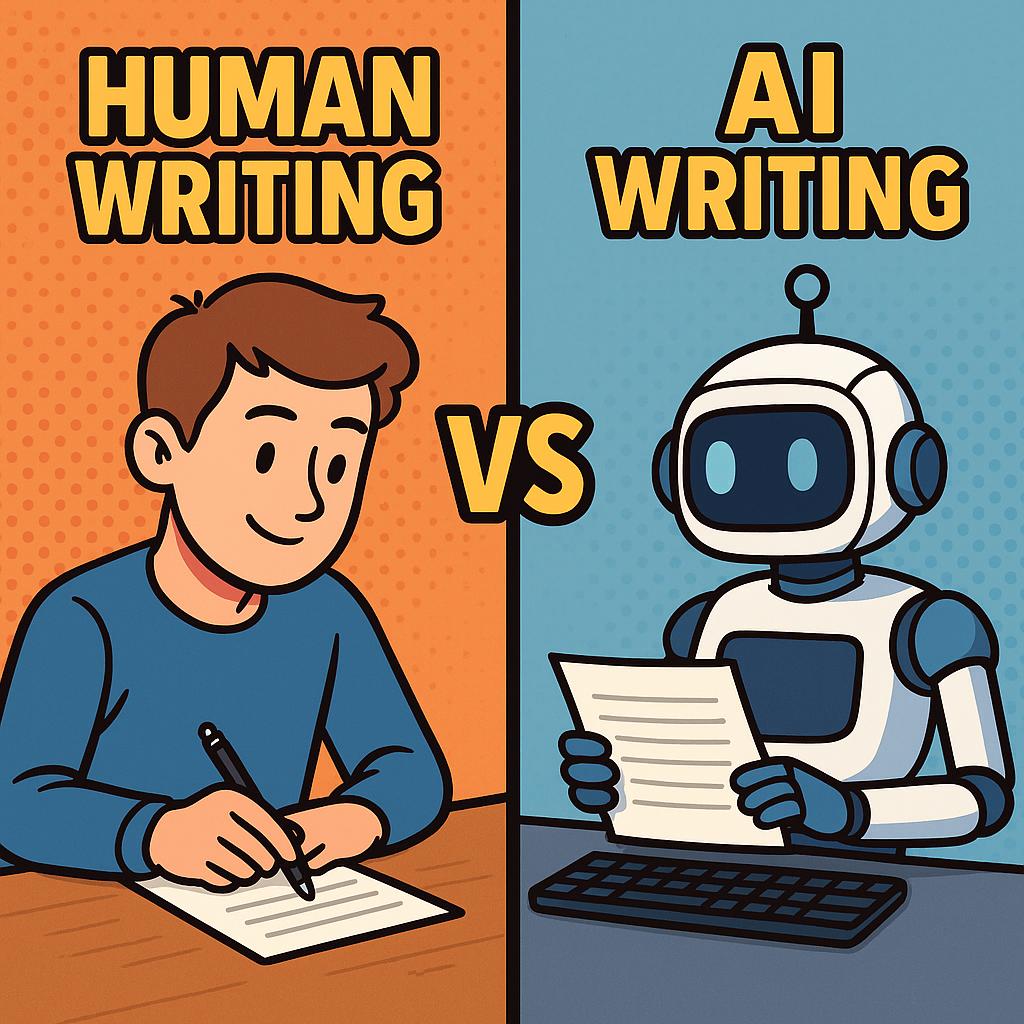
Human writing often contains:
- Personal observations
- Emotional nuance
- Storytelling
- Unique perspectives
- Imperfect but natural sentence flow
- Audience awareness
AI writing often contains:
- Repetitive structures
- Predictable transitions
- Generic advice
- Excessive explanations
- Lack of firsthand experiences
- Limited emotional depth
The closer you can move AI-generated content toward human characteristics, the more engaging and valuable it becomes.
How to Get AI to Write Like a Human: Core Principles
Getting human-like output requires a combination of prompt engineering, contextual guidance, and post-editing.
Give AI a Human Writing Role
Instead of asking AI to write generally, assign a role.
For example:
“Act as an experienced technology journalist who has covered AI tools for 10 years.”
Or:
“Write like a successful entrepreneur explaining lessons learned from launching a startup.”
Roles provide context and help AI adopt a more authentic perspective.

Define Your Audience for More Human-Like AI Writing
Audience awareness dramatically affects writing quality.
Instead of:
“Write about AI tools.”
Use:
“Write for beginner freelancers who have never used AI software before.”
The more specific the audience, the more natural and relevant the content becomes.
Use Conversational Prompts to Make AI Sound Human
Many AI systems default to formal language.
Encourage a conversational tone by including instructions such as:
- Write naturally.
- Use everyday language.
- Avoid corporate jargon.
- Sound like an experienced mentor.
- Use contractions.
- Write as if speaking directly to the reader.
This simple adjustment often improves readability immediately.
Create Natural Sentence Variety in AI Content
Human writers naturally vary sentence length.
AI frequently creates repetitive sentence patterns.
Request:
- Short and long sentences.
- Occasional rhetorical questions.
- Natural transitions.
- Varied paragraph structures.
This creates rhythm and prevents monotony.
Step-by-Step Process to Get AI Writing Like a Human
The following workflow consistently produces better results than basic prompting.
Step 1: Start With Detailed Instructions
Provide:
- Topic
- Audience
- Goal
- Tone
- Content format
- Desired style
Example:
“Write a beginner-friendly article about AI productivity tools for small business owners. Use a conversational tone, practical examples, and simple explanations.”
The more information you provide, the less AI must guess.
Step 2: Include Style References
One of the most effective techniques is providing examples.
For example:
“Write in a style similar to a trusted technology magazine.”
Or:
“Use a friendly teaching style similar to a professional coach.”
Style references help shape output quality significantly.
You can also experiment with specialized AI writing platforms such as MakeAI Now, which offers AI writing, rewriting, and content-generation tools that can help streamline the content creation process.
Step 3: Ask for Stories and Examples
Human communication relies heavily on examples.
Instead of generic statements, request:
- Case studies
- Real-world scenarios
- Practical applications
- Hypothetical situations
Readers connect with examples because they make information easier to understand and remember.
Step 4: Remove AI Clichés
Common AI phrases include:
- In today’s digital landscape
- It is important to note
- Leveraging technology
- Unlock your potential
- Revolutionary solution
These phrases instantly signal AI-generated content.
Replace them with natural language during editing.
Step 5: Edit for Personality
After generating content:
- Add opinions.
- Add experiences.
- Rewrite repetitive sections.
- Remove unnecessary filler.
- Improve flow.
The final polish is what often transforms average AI content into exceptional content.
Comparison Table: Human Writing vs AI Writing
| Factor | Human Writing | AI Writing |
|---|---|---|
| Creativity | High | Moderate |
| Personal Experience | Present | Usually absent |
| Emotional Depth | Strong | Limited |
| Consistency | Variable | High |
| Speed | Slower | Extremely fast |
| Storytelling | Natural | Requires prompting |
| Original Perspective | Strong | Limited |
| Scalability | Limited | Excellent |
| Authenticity | High | Depends on editing |
| Engagement | Often higher | Depends on prompt quality |
Examples of AI Writing That Sounds Human

The most successful content creators rarely publish raw AI output.
Instead, they use AI as a collaborative assistant.
Example 1: Blog Content
A blogger creates a 2,000-word article using AI.
Before publishing:
- Adds personal experiences.
- Includes original research.
- Rewrites generic sections.
- Improves storytelling.
Result: Readers perceive the content as authentic and valuable.
Example 2: Email Marketing
A business owner generates an email draft.
They then:
- Add customer stories.
- Include brand personality.
- Rewrite robotic sections.
The final email achieves higher open and click rates.
Example 3: Social Media Content
A creator uses AI to generate content ideas.
Instead of posting directly, they:
- Add opinions.
- Share experiences.
- Include personal insights.
The content feels genuine rather than automated.
Benefits of Learning How to Get AI to Write Like a Human
Human-like AI content delivers significant advantages.
First, it improves reader engagement. Visitors spend more time consuming content that feels authentic and relatable.
Second, it increases trust. People trust content that demonstrates expertise and real-world understanding.
Third, it improves brand perception. Robotic content can make a business appear careless or low quality.
Fourth, it enhances SEO performance. Search engines increasingly reward content that demonstrates expertise, experience, authority, and trustworthiness.
Fifth, it improves conversion rates. Human-centered communication is more persuasive than generic marketing language.
Another major benefit is scalability. Businesses can produce content faster while maintaining quality standards.
Human-like AI writing also performs better on AI-powered search platforms where usefulness and context matter more than keyword density.
Ultimately, the goal is not simply producing more content but creating content people actually want to read.
Risks When Trying to Make AI Write Like a Human
Although AI can produce impressive content, it has limitations.
Hallucinations and Inaccuracies
AI occasionally generates incorrect information confidently.
Always verify facts before publishing.
Lack of Genuine Experience
AI cannot truly experience events.
Claims of firsthand knowledge should be reviewed carefully.
Generic Outputs
Without detailed prompts, AI often produces average content.
Quality depends heavily on user guidance.
Over-Reliance on Automation
Businesses that publish unedited AI content risk losing credibility.
Readers value expertise and authenticity.
Voice Inconsistency
Without proper instructions, AI may change tone throughout a document.
Establishing clear brand guidelines helps maintain consistency.
Understanding these limitations helps users create higher-quality content while avoiding common pitfalls.
Common Mistakes That Prevent AI From Writing Like a Human
Many users struggle because they unknowingly sabotage output quality.
Using Generic Prompts for AI Writing
Generic prompts produce generic results.
Specific instructions consistently outperform simple requests.
Publishing AI Content Without Human Editing
Raw AI output often requires refinement.
Editing remains one of the most important steps.
Ignoring Human Writing Style and Audience Intent
Content should address reader problems, not simply explain topics.
Audience-first writing always performs better.
Over-Optimizing AI Content for Keywords
Keyword stuffing reduces readability.
Modern SEO prioritizes usefulness and context.
Focusing Only on Word Count
Long content is not automatically good content.
Depth, clarity, and relevance matter more than length.
Avoiding these mistakes can dramatically improve results.
Expert Tips to Get AI to Write More Like a Human
Content strategists and SEO professionals increasingly view AI as a productivity tool rather than a replacement for human expertise.
The most successful workflow follows a hybrid model.
AI handles:
- Research assistance
- Draft generation
- Content outlining
- Idea expansion
Humans handle:
- Strategy
- Expertise
- Storytelling
- Fact-checking
- Editing
- Brand voice
Experts also recommend building custom prompt frameworks rather than using generic prompts repeatedly.
Another emerging best practice is feeding AI examples of previous content that reflects your preferred style.
This allows the model to imitate patterns, tone, and structure more accurately.
Many high-performing content teams now spend more time refining prompts and editing outputs than generating initial drafts.
The future belongs to creators who learn to collaborate effectively with AI rather than compete against it.
FAQs About How to Get AI to Write Like a Human
1. Can AI truly write exactly like a human?
Not perfectly. AI can closely mimic human writing patterns, but genuine experiences, emotions, and unique perspectives still come from humans.
2. Which AI tool writes most like a human?
Several modern AI tools perform well, including OpenAI ChatGPT, Google Gemini, and Anthropic Claude. Results depend more on prompting than the tool itself. If you’re comparing platforms, our guide to choosing the best AI app can help you find the right tool for your specific writing needs.
3. Do search engines penalize AI content?
Search engines generally focus on quality rather than content origin. Helpful, accurate, and valuable content performs better regardless of whether AI assisted in creation.
4. Should I edit AI-generated content?
Yes. Editing improves accuracy, readability, authenticity, and brand consistency.
5. How can I make AI sound less robotic?
Use detailed prompts, audience-specific instructions, conversational language, examples, and thorough editing.
6. Why does AI repeat itself?
AI predicts likely patterns and may reuse similar structures unless instructed otherwise.
7. Can AI create emotional content?
AI can simulate emotional language but does not experience emotions itself.
8. Is AI writing good for blogging?
Yes, when combined with human expertise, editing, and original insights.
9. How long should prompts be?
Longer prompts often produce better results because they provide more context and guidance.
10. What is the biggest factor in human-like AI writing?
Prompt quality combined with human editing has the greatest impact on final content quality.
Final Verdict
Learning how to get ai write like a human is less about finding a magical tool and more about mastering the process. Human-like content comes from detailed prompts, audience awareness, conversational language, storytelling, practical examples, and thoughtful editing.
The most effective creators use AI as a collaborator rather than a replacement. They combine the speed of AI with human creativity, expertise, judgment, and authenticity.
As AI technology continues to improve, the gap between machine-generated and human-written content will narrow. However, the people who consistently create the best content will be those who understand how to guide AI strategically while adding the uniquely human elements that readers value most.