



What Is AI Definition? Meaning, Types, Examples, Benefits, and How Artificial Intelligence Works

What is AI definition? Artificial Intelligence (AI) refers to the ability of machines and computer systems to perform tasks that normally require human intelligence. These tasks include learning from data, recognizing patterns, understanding language, solving problems, and making decisions. Over the last decade, AI has evolved from a research field into a technology that influences nearly every industry, including healthcare, finance, education, retail, transportation, and entertainment.
Table Of Content
- Quick Answer: What Is AI Definition?
- Key Takeaways About the AI Definition
- What Is AI Definition and What Does Artificial Intelligence Mean?
- Understanding Narrow AI Through the AI Definition
- How General AI Fits the AI Definition
- How the AI Definition Works in Practice
- Data Collection in Artificial Intelligence
- Machine Learning and the AI Definition
- Deep Learning in Artificial Intelligence
- How AI Systems Make Decisions
- Types of Artificial Intelligence Explained
- Reactive AI Systems Explained
- Limited Memory Artificial Intelligence
- Theory of Mind Artificial Intelligence
- Self-Aware Artificial Intelligence
- Comparison Table: AI vs Machine Learning vs Deep Learning
- Real-World Examples That Explain the AI Definition
- Virtual Assistants and Chatbots
- Healthcare and Medical Applications
- Banking and Finance
- Retail and E-Commerce
- Transportation and Autonomous Vehicles
- Benefits of Artificial Intelligence and Why AI Matters
- How Artificial Intelligence Improves Efficiency
- How AI Supports Better Decision-Making
- Accuracy Benefits of Artificial Intelligence
- Personalization Through AI Technology
- Innovation Powered by Artificial Intelligence
- Risks and Limitations of Artificial Intelligence
- Privacy Concerns in Artificial Intelligence
- Bias Challenges in AI Systems
- How AI Impacts Jobs and Employment
- Cost Limitations of Artificial Intelligence
- Human Limitations of AI Technology
- Common Misconceptions About the Definition of AI
- Assuming AI Is the Same as Human Intelligence
- Expecting Perfect Results
- Ignoring Data Quality
- Believing AI Will Replace Humans Completely
- Neglecting Ethics and Responsibility
- Expert Insights on AI Definition and Artificial Intelligence
- Frequently Asked Questions About What Is AI Definition
- 1. What is the Definition of AI in simple words?
- 2. What are some examples of AI?
- 3. Is machine learning the same as AI?
- 4. What are the benefits of AI?
- 5. Can AI replace humans?
- Final Thoughts on What Is AI Definition
Today, AI is integrated into many tools and services people use every day. Search engines provide personalized results, streaming platforms recommend content, smartphones use voice assistants, and businesses rely on AI to automate operations and analyze large amounts of information. Recent advances in generative AI have made artificial intelligence even more accessible to individuals and organizations.
Understanding the meaning of AI, how it works, and the different types of artificial intelligence helps people make better decisions about using this technology. Whether you are a student, business owner, developer, or simply curious about emerging technologies, learning the fundamentals of AI provides valuable insight into one of the most important innovations of the digital age.
Quick Answer: What Is AI Definition?
Artificial Intelligence (AI) is a branch of computer science that enables machines and software to imitate human intelligence. AI systems can learn from data, recognize patterns, solve problems, understand language, and make decisions with minimal human intervention.
Key Takeaways About the AI Definition
- AI enables computers and machines to perform tasks associated with human intelligence.
- Machine learning and deep learning are major branches of AI.
- Artificial intelligence powers chatbots, recommendation systems, healthcare tools, and self-driving vehicles.
- AI improves efficiency and productivity across industries.
- Understanding both the benefits and limitations of AI is essential for responsible adoption.
What Is AI Definition and What Does Artificial Intelligence Mean?
Artificial Intelligence, commonly referred to as AI, is a field of computer science focused on creating machines and software capable of performing tasks that typically require human intelligence. These tasks include learning from experience, understanding natural language, recognizing images, making decisions, and solving complex problems.
The concept of AI dates back to the 1950s when scientists began exploring whether machines could imitate human thinking. Over time, advances in computing power, internet connectivity, and data availability accelerated the development of AI technologies. Today, artificial intelligence is no longer a futuristic concept. It has become an integral part of modern life.
Unlike traditional software that follows a fixed set of instructions, AI systems can analyze information, identify patterns, and improve their performance through experience. This ability to learn from data is what makes AI different from conventional computer programs.
For example, email spam filters become better at identifying unwanted messages over time. Recommendation systems on platforms like Netflix and YouTube learn user preferences and suggest relevant content. Navigation apps analyze traffic patterns to recommend faster routes. These are all practical examples of artificial intelligence in action.
AI is generally categorized into two broad groups:
Understanding Narrow AI Through the AI Definition
Narrow AI is designed to perform specific tasks. Voice assistants, image recognition systems, recommendation engines, and chatbots are examples of narrow AI. Most AI applications used today belong to this category.
How General AI Fits the AI Definition
General AI refers to hypothetical systems capable of understanding and performing intellectual tasks at a level similar to humans. Although researchers are working toward this goal, true general AI does not yet exist.
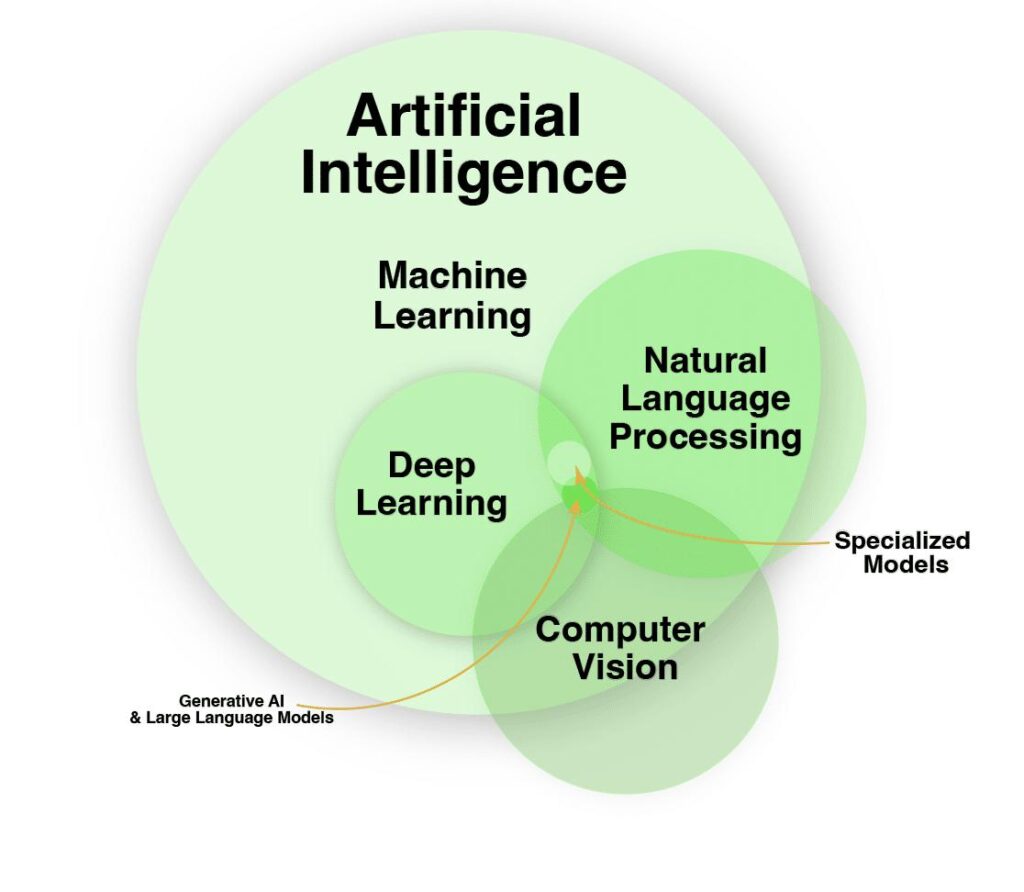
Artificial intelligence combines multiple technologies, including machine learning, deep learning, natural language processing, and computer vision. Together, these technologies enable machines to process information and provide intelligent outputs.
As AI continues to evolve, its influence on businesses, governments, and daily life is expected to grow significantly, making it one of the most transformative technologies of the twenty-first century.
How the AI Definition Works in Practice
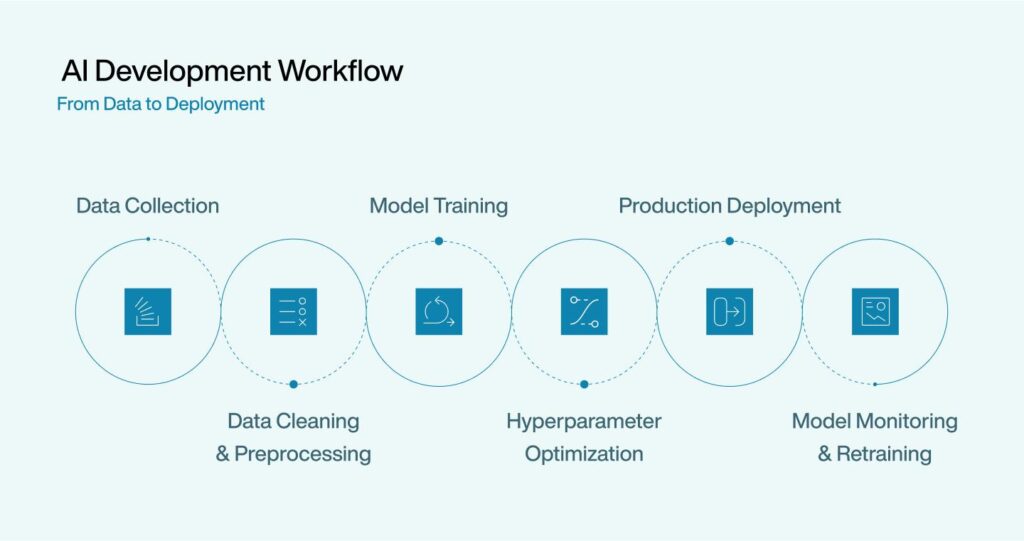
Understanding what is AI definition becomes easier when examining how artificial intelligence actually functions. At its core, AI works by collecting data, analyzing patterns, learning from examples, and generating outputs based on that information. Although the underlying technology can be complex, the overall process follows a series of steps.
Data Collection in Artificial Intelligence
Data is the foundation of artificial intelligence. AI systems require large volumes of information to learn effectively. This data can include text, images, videos, audio recordings, numerical values, customer interactions, and sensor readings.
For instance, an image-recognition AI designed to identify cats and dogs must first be trained using thousands or millions of labeled images. Similarly, language models learn from extensive collections of books, articles, and online content.
The quality of data directly affects AI performance. High-quality datasets improve accuracy, while poor or biased data can produce unreliable results.
Machine Learning and the AI Definition
Machine learning is one of the most important components of AI. Instead of relying solely on pre-programmed rules, machine learning algorithms analyze examples and discover patterns automatically.
Suppose a bank wants to detect fraudulent transactions. By analyzing millions of previous transactions, an AI model can identify unusual activities and flag suspicious behavior. Over time, the system improves as it processes more information.
Common machine learning approaches include:
- Supervised learning
- Unsupervised learning
- Reinforcement learning
These methods allow AI systems to adapt and improve continuously.
Deep Learning in Artificial Intelligence
Deep learning is an advanced subset of machine learning inspired by the structure of the human brain. It uses artificial neural networks with multiple layers to process information.
Deep learning powers many modern AI applications, including:
- Speech recognition
- Facial recognition
- Autonomous vehicles
- Language translation
- Generative AI systems
Neural networks enable computers to recognize complex relationships and make highly accurate predictions.
How AI Systems Make Decisions
Once trained, AI systems analyze new information and generate predictions or recommendations. For example:
- Streaming services recommend movies.
- Navigation apps calculate the fastest routes.
- Chatbots answer customer questions.
- Healthcare systems assist doctors in diagnosis.
Many AI models continue improving over time by learning from additional data and user interactions. This ability to adapt makes artificial intelligence extremely valuable across industries. Businesses and developers interested in building intelligent systems can also explore the process of how to make an AI, including data collection, model training, and deployment.
Types of Artificial Intelligence Explained
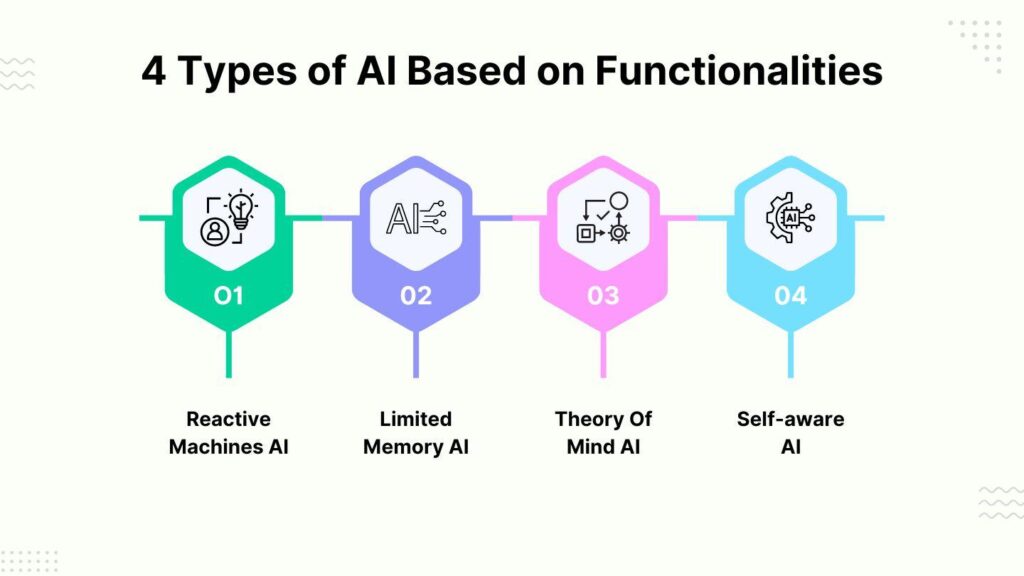
Artificial intelligence can be classified based on functionality and capabilities. Understanding these categories helps explain why different AI systems are designed for different purposes.
Reactive AI Systems Explained
Reactive AI represents the simplest form of artificial intelligence. These systems respond to current inputs but cannot store memories or learn from previous experiences.
One famous example is IBM’s Deep Blue, the chess computer that defeated world champion Garry Kasparov. Deep Blue could analyze possible moves and react accordingly, but it had no understanding beyond the immediate game.
Reactive AI systems are reliable for specialized tasks but lack adaptability and long-term learning capabilities.
Limited Memory Artificial Intelligence
Limited memory AI can learn from historical data and use past experiences to improve decisions. Most modern AI applications belong to this category.
Examples include:
- Self-driving vehicles
- Fraud detection systems
- Recommendation engines
- Virtual assistants
Self-driving cars analyze traffic conditions, nearby vehicles, and previous driving patterns to make decisions. Recommendation systems use viewing or purchase history to provide personalized suggestions.
Limited memory AI has become the foundation of many commercial applications because it combines efficiency with adaptability.
Theory of Mind Artificial Intelligence
Theory of Mind AI refers to systems capable of understanding emotions, intentions, and social interactions. Researchers are still exploring this area, and practical implementations remain limited.
If achieved, Theory of Mind AI could improve:
- Human-robot interactions
- Customer support systems
- Healthcare assistance
- Educational technologies
Although progress has been made, this category remains largely experimental.
Self-Aware Artificial Intelligence
Self-aware AI is a hypothetical form of artificial intelligence possessing consciousness and self-awareness. Such systems would understand their own existence and emotions similarly to humans.
Currently, self-aware AI exists only in science fiction and theoretical discussions. No existing technology has reached this stage.
Comparison Table: AI vs Machine Learning vs Deep Learning
Although people often use the terms AI, machine learning, and deep learning interchangeably, they are not exactly the same. Artificial intelligence is the broader concept, while machine learning and deep learning are subsets of AI that enable machines to learn from data and improve over time.
| Feature | Artificial Intelligence | Machine Learning | Deep Learning |
|---|---|---|---|
| Definition | Simulates human intelligence | Learns patterns from data | Uses neural networks for advanced learning |
| Scope | Broadest field | Subset of AI | Subset of Machine Learning |
| Data Requirement | Moderate to high | High | Very high |
| Human Intervention | Moderate | Lower | Minimal |
| Complexity | Medium | High | Very High |
| Examples | Chatbots, Robotics | Fraud Detection | Image Recognition, Generative AI |
Artificial intelligence serves as the foundation for intelligent systems. Machine learning allows those systems to improve through experience, while deep learning enables computers to process highly complex information such as speech, images, and language.
Understanding the differences between these technologies helps businesses and individuals choose the right solutions for their needs.
Real-World Examples That Explain the AI Definition
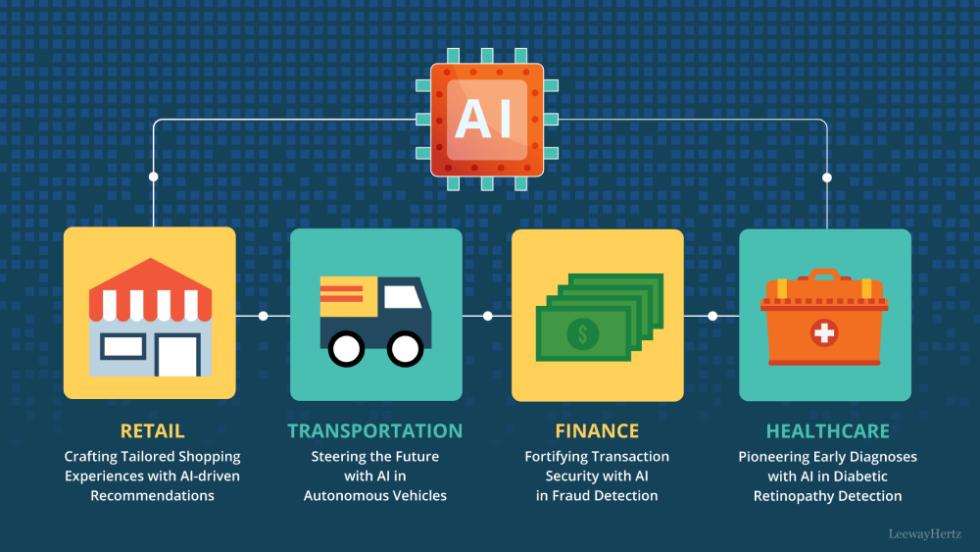
Artificial intelligence has become deeply integrated into everyday life. Many people interact with AI-powered technologies without even realizing it. From smartphones to healthcare systems, AI is transforming how individuals and businesses operate.
Virtual Assistants and Chatbots
Voice assistants like Siri, Alexa, and Google Assistant use artificial intelligence to understand commands, answer questions, and perform tasks. Chatbots have also become common in customer service, helping businesses provide support around the clock.
Generative AI tools such as ChatGPT have further expanded the capabilities of conversational systems. These platforms assist with writing, coding, research, and problem-solving. ChatGPT represents a modern example of generative AI, and many readers also wonder whether ChatGPT itself falls into that category. This detailed guide explains whether ChatGPT is generative AI and how it works.
As natural language processing continues to improve, virtual assistants are becoming more accurate and capable of handling complex interactions.
Understanding everyday applications is important because AI has become part of daily life. If you’re new to this technology, here’s a detailed guide on how to use AI effectively for work, learning, and personal productivity.
Healthcare and Medical Applications
Artificial intelligence is revolutionizing healthcare by improving diagnosis, treatment, and patient care.
Healthcare professionals use AI for:
- Detecting diseases from medical images.
- Predicting health risks.
- Discovering new drugs.
- Monitoring patients remotely.
- Assisting in robotic surgeries.
AI-powered tools help doctors identify abnormalities in X-rays and MRI scans faster and with greater accuracy. This improves patient outcomes and supports better decision-making.
Banking and Finance
Financial institutions rely heavily on artificial intelligence to manage risks and protect customers.
Common applications include:
- Fraud detection.
- Credit scoring.
- Automated trading.
- Customer support chatbots.
- Personalized financial recommendations.
Banks analyze millions of transactions using machine learning algorithms to identify suspicious activities. AI helps reduce fraud and improve operational efficiency.
Retail and E-Commerce
Online retailers use AI to provide personalized experiences.
Examples include:
- Product recommendations.
- Inventory management.
- Price optimization.
- Customer service automation.
Companies like Amazon and Netflix rely on recommendation systems to increase engagement and customer satisfaction. These systems analyze user behavior to suggest relevant products and content.
Transportation and Autonomous Vehicles
AI has transformed the transportation industry through self-driving technology and route optimization.
Artificial intelligence enables vehicles to:
- Detect obstacles.
- Analyze traffic conditions.
- Recognize road signs.
- Make driving decisions.
Ride-sharing platforms and logistics companies also use AI to optimize routes and improve fuel efficiency.
As autonomous systems become more advanced, transportation is expected to become safer and more efficient.
Benefits of Artificial Intelligence and Why AI Matters
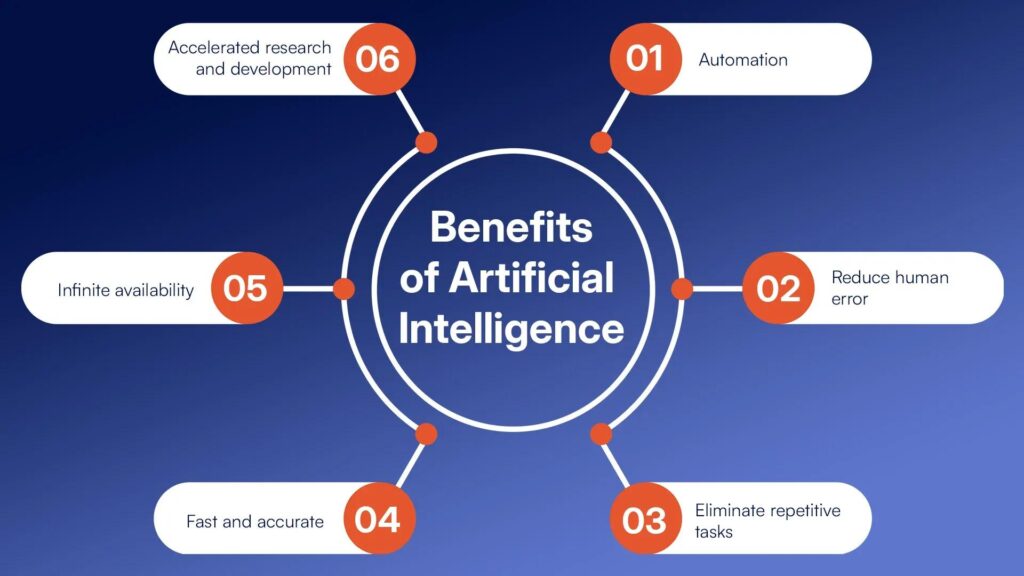
Artificial intelligence offers numerous advantages across industries and has become a powerful tool for improving productivity and innovation.
How Artificial Intelligence Improves Efficiency
One of the biggest advantages of AI is its ability to automate repetitive tasks. Businesses can save time and resources by allowing machines to handle routine processes.
Examples include:
- Data entry.
- Customer support.
- Email filtering.
- Inventory tracking.
- Document processing.
Automation enables employees to focus on strategic and creative activities rather than repetitive work.
How AI Supports Better Decision-Making
AI systems analyze enormous amounts of information quickly and accurately. This allows organizations to make informed decisions based on real-time insights.
For example:
- Retail companies predict customer demand.
- Hospitals identify disease risks.
- Financial institutions assess creditworthiness.
- Manufacturers optimize production.
Data-driven decision-making improves efficiency and reduces uncertainty.
Accuracy Benefits of Artificial Intelligence
Humans are prone to mistakes, especially when dealing with large volumes of information. AI systems can process data with remarkable precision.
Applications benefiting from increased accuracy include:
- Medical diagnostics.
- Financial forecasting.
- Quality control.
- Image recognition.
- Fraud detection.
Although AI is not perfect, it can significantly reduce human error.
Personalization Through AI Technology
Consumers increasingly expect personalized experiences. Artificial intelligence helps businesses deliver tailored recommendations and services.
Examples include:
- Netflix movie suggestions.
- Spotify playlists.
- Amazon product recommendations.
- Personalized advertisements.
This improves customer satisfaction and strengthens brand loyalty.
Innovation Powered by Artificial Intelligence
Artificial intelligence enables organizations to create new products and services. Companies that adopt AI effectively often gain a competitive advantage.
Industries such as healthcare, finance, education, and manufacturing continue to develop innovative solutions powered by AI.
As AI technology advances, new opportunities for growth and innovation are expected to emerge.
Risks and Limitations of Artificial Intelligence
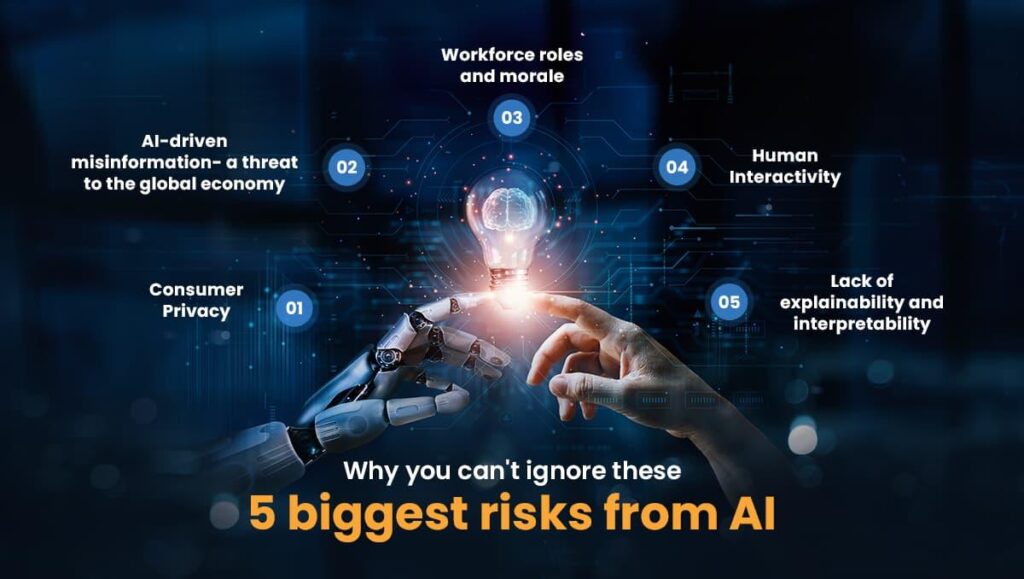
Despite its advantages, artificial intelligence presents challenges that organizations and society must address responsibly.
Privacy Concerns in Artificial Intelligence
AI systems require large amounts of data to function effectively. This raises concerns about privacy and the protection of sensitive information.
Potential risks include:
- Unauthorized access to data.
- Cyberattacks.
- Misuse of personal information.
- Surveillance concerns.
Organizations must implement strong security measures and comply with privacy regulations to protect users.
Bias Challenges in AI Systems
AI systems learn from historical data. If that data contains bias, the resulting decisions may also be biased.
Examples include:
- Hiring systems favoring certain groups.
- Facial recognition inaccuracies.
- Biased loan approval models.
Developers must ensure datasets are diverse and continuously monitor AI systems for fairness.
How AI Impacts Jobs and Employment
Automation may replace some repetitive jobs, particularly in manufacturing and administrative roles.
However, AI also creates new opportunities in:
- Data science.
- AI engineering.
- Cybersecurity.
- Digital marketing.
- Software development.
Workers may need to acquire new skills to adapt to changing job markets. While automation may affect certain roles, experts believe AI will transform many professions rather than eliminate them entirely. This raises an important question about whether AI will replace jobs in the future.
Cost Limitations of Artificial Intelligence
Developing and maintaining advanced AI systems requires:
- Powerful hardware.
- High-quality datasets.
- Skilled professionals.
- Continuous updates.
Smaller organizations may face challenges when implementing AI solutions due to costs and technical requirements.
Human Limitations of AI Technology
Artificial intelligence excels at processing data but lacks emotional intelligence, creativity, and common sense.
Humans remain essential for:
- Ethical decisions.
- Strategic thinking.
- Creativity.
- Empathy.
- Complex problem-solving.
AI should be viewed as a tool that enhances human capabilities rather than replacing them entirely.
Common Misconceptions About the Definition of AI
Artificial intelligence is often misunderstood, leading to unrealistic expectations and misconceptions.
Assuming AI Is the Same as Human Intelligence
Many people believe AI thinks and feels like humans. In reality, AI systems operate through algorithms and data rather than emotions or consciousness.
Current AI models are highly specialized and lack self-awareness.
Expecting Perfect Results
AI systems can make mistakes. Poor-quality data, biases, and unexpected situations can affect performance.
Human oversight remains essential for ensuring accuracy and reliability.
Ignoring Data Quality
AI models are only as good as the data used to train them. Poor data leads to poor outcomes.
Organizations should prioritize data quality and continuous monitoring.
Believing AI Will Replace Humans Completely
AI automates specific tasks, but creativity, empathy, leadership, and critical thinking remain uniquely human strengths.
Rather than replacing people, AI is more likely to transform jobs and create new opportunities.
Neglecting Ethics and Responsibility
Ethical concerns surrounding AI include:
- Privacy.
- Bias.
- Transparency.
- Accountability.
Responsible AI development requires collaboration between businesses, governments, and researchers.
Expert Insights on AI Definition and Artificial Intelligence
Artificial intelligence has moved far beyond being a futuristic concept. Experts across technology, healthcare, finance, and education view AI as one of the most transformative innovations of the modern era. However, most researchers and industry leaders agree that AI should be considered a tool that augments human capabilities rather than a replacement for human intelligence.
One of the biggest lessons from successful AI adoption is that technology alone is not enough. Organizations that achieve the best results combine AI systems with skilled professionals, high-quality data, and clear business objectives. Companies that simply implement AI without understanding their goals often struggle to realize meaningful benefits.
Another important insight from experts is the importance of responsible AI development. Bias, transparency, privacy, and accountability have become major concerns as AI systems influence decisions related to healthcare, finance, hiring, and education. Governments and technology companies are increasingly focusing on ethical AI frameworks to ensure fairness and reduce risks.
Industry leaders also emphasize that continuous learning is essential. AI technologies evolve rapidly, and businesses that invest in employee training and digital transformation are more likely to remain competitive. Rather than fearing AI, experts recommend understanding its strengths and limitations and using it strategically to improve productivity and innovation.
As artificial intelligence continues to advance, collaboration between researchers, policymakers, and businesses will play a crucial role in ensuring that AI delivers benefits while minimizing unintended consequences.
Frequently Asked Questions About What Is AI Definition
1. What is the Definition of AI in simple words?
AI is technology that enables machines to learn, solve problems, and perform tasks that typically require human intelligence.
2. What are some examples of AI?
Examples include ChatGPT, Siri, Alexa, Netflix recommendations, Google Maps, and self-driving cars.
3. Is machine learning the same as AI?
No. Machine learning is a subset of AI that helps systems learn from data.
4. What are the benefits of AI?
AI improves efficiency, automates tasks, enhances accuracy, and supports better decision-making.
5. Can AI replace humans?
No. AI can automate some tasks, but human creativity, emotions, and critical thinking remain essential.
Final Thoughts on What Is AI Definition
Understanding what is AI definition is essential in today’s technology-driven world. Artificial intelligence refers to systems and machines capable of performing tasks that typically require human intelligence, including learning, reasoning, language understanding, and decision-making. Thanks to advances in machine learning, deep learning, and natural language processing, AI has become a fundamental technology that powers many services people rely on every day.
From healthcare and finance to education and entertainment, artificial intelligence is transforming industries and creating new opportunities for businesses and individuals. Its ability to automate tasks, analyze massive datasets, and improve efficiency makes AI one of the most valuable technologies of the digital age.
However, AI is not without challenges. Issues related to privacy, bias, ethics, and workforce changes highlight the importance of responsible development and human oversight. Organizations and individuals that understand both the advantages and limitations of AI will be better positioned to adapt to future technological advancements.

As AI continues to evolve, its influence on society, businesses, and everyday life will only increase, with platforms such as MakeAINow making advanced AI capabilities more accessible for creators, businesses, and developers. Learning the fundamentals of artificial intelligence today provides a strong foundation for understanding the innovations that will shape the future.